
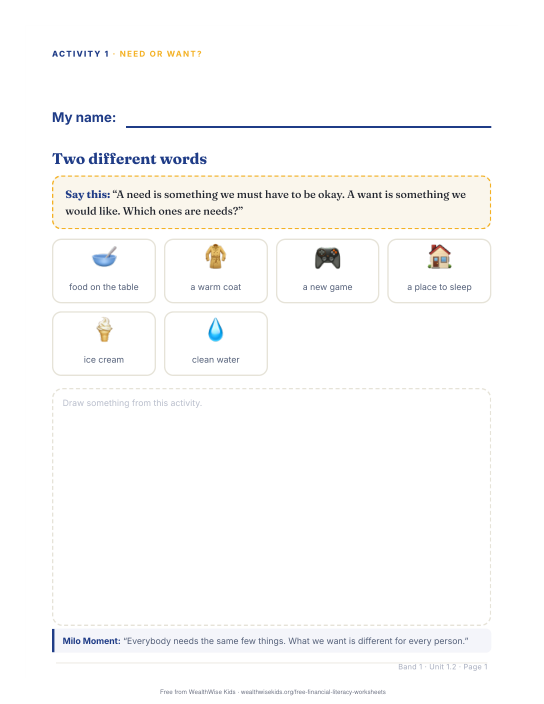
Need or Want?
Six everyday things to sort into needs and wants, then one of each to draw. It's where money starts for a young child: two different words, and knowing which is which.
Kindergarten to 2nd Grade · Free · With answers
Money starts as sorting, counting and choosing. Nothing here needs reading fluency, and most of it works at a kitchen table. Every sheet below is a real activity, unchanged, from our K–12 curriculum — one page, with an answer page behind it.
No account. No email. Nothing collected about your child.
Six everyday things to sort into needs and wants, then one of each to draw. It's where money starts for a young child: two different words, and knowing which is which.
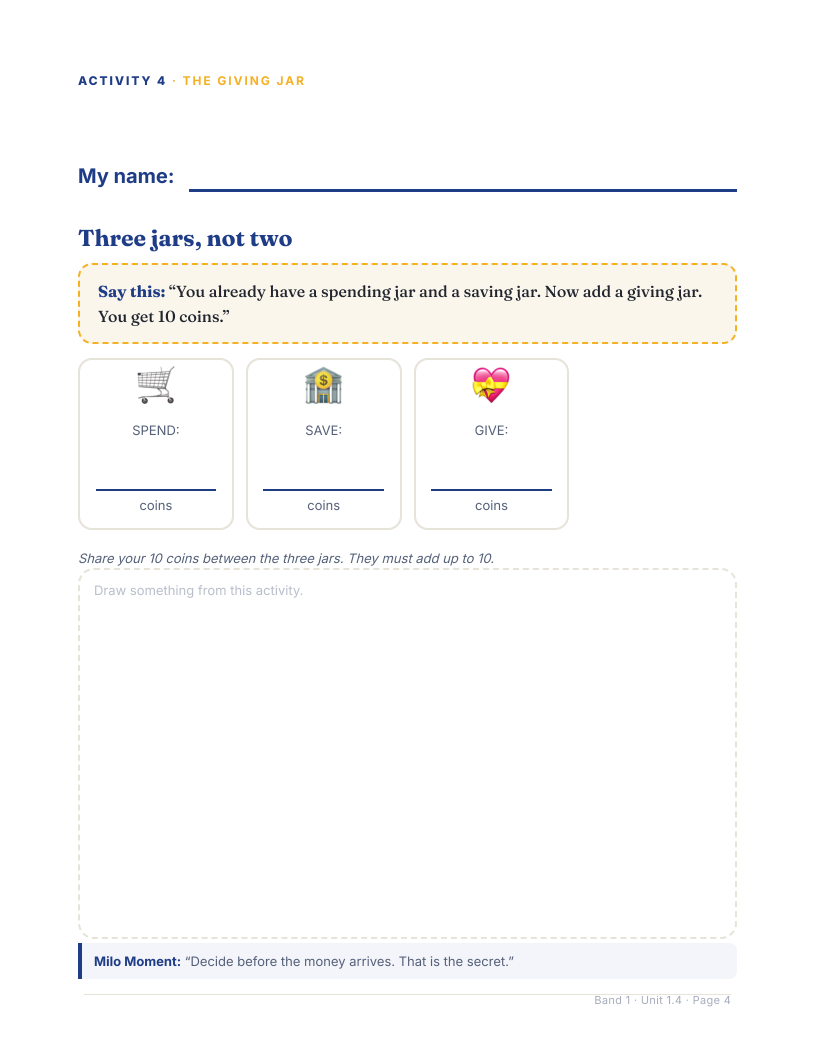
Ten coins, three jars — spend, save and give. Split them however you like, as long as they add up to ten, then say why.
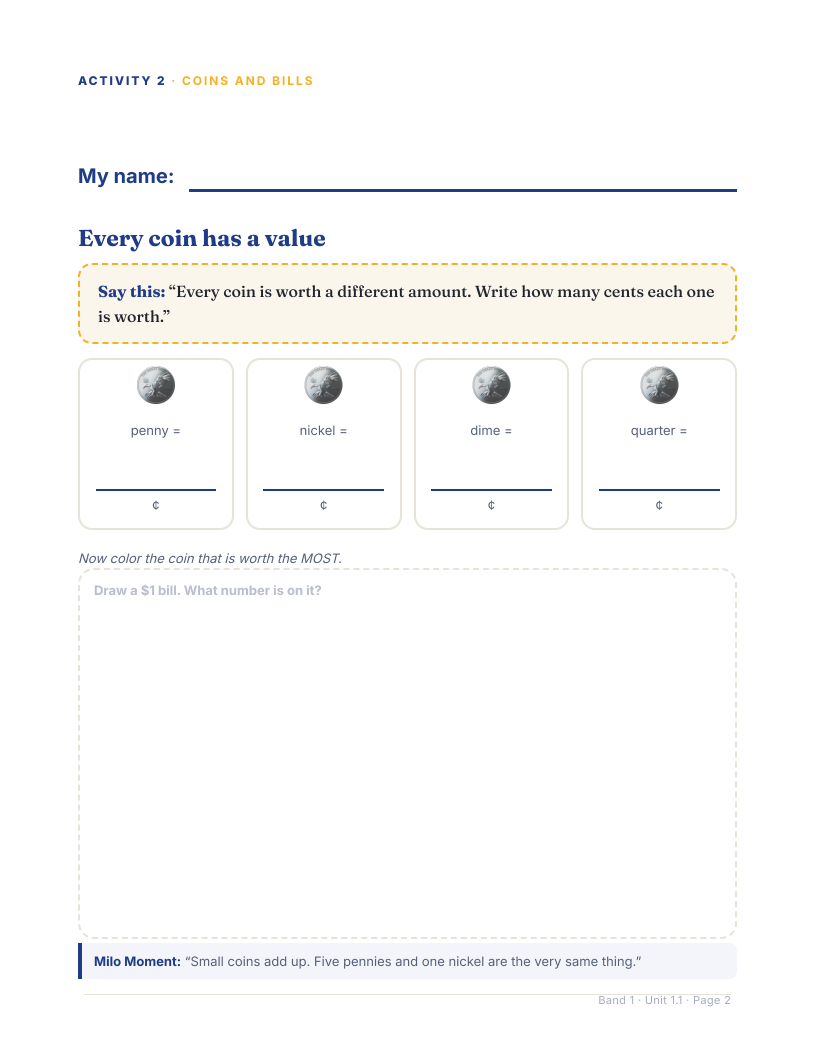
Write what a penny, nickel, dime and quarter are each worth, color the one worth the most, then draw a dollar bill and find the number on it.
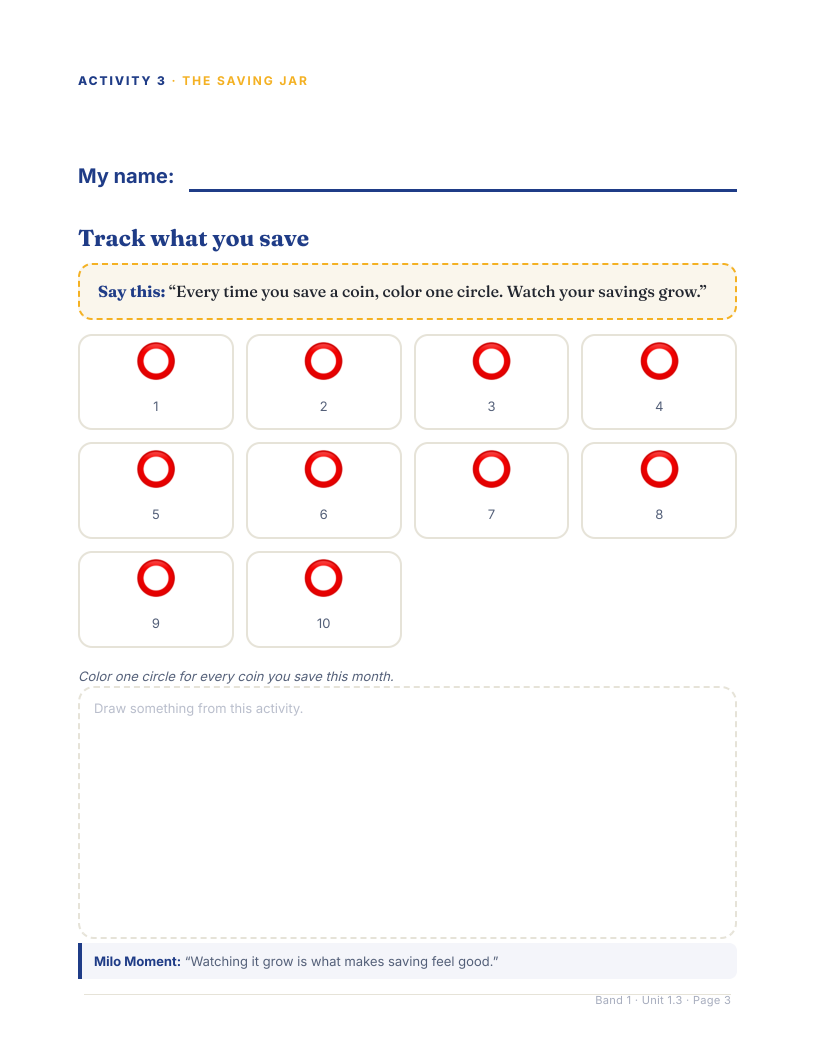
Ten circles. Color one in every time you save a coin, and watch a month of saving turn into something you can see.
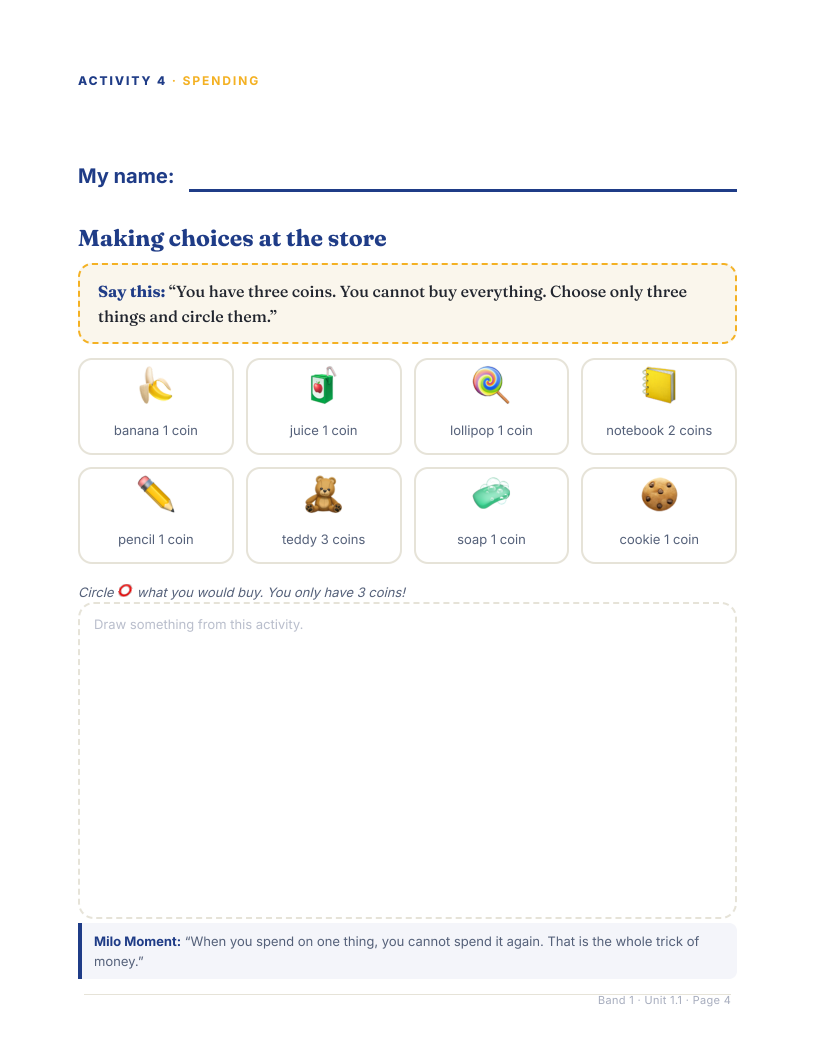
Three coins and eight things on the shelf, priced one to three coins. Circle what you would buy — and find out that the teddy costs everything.
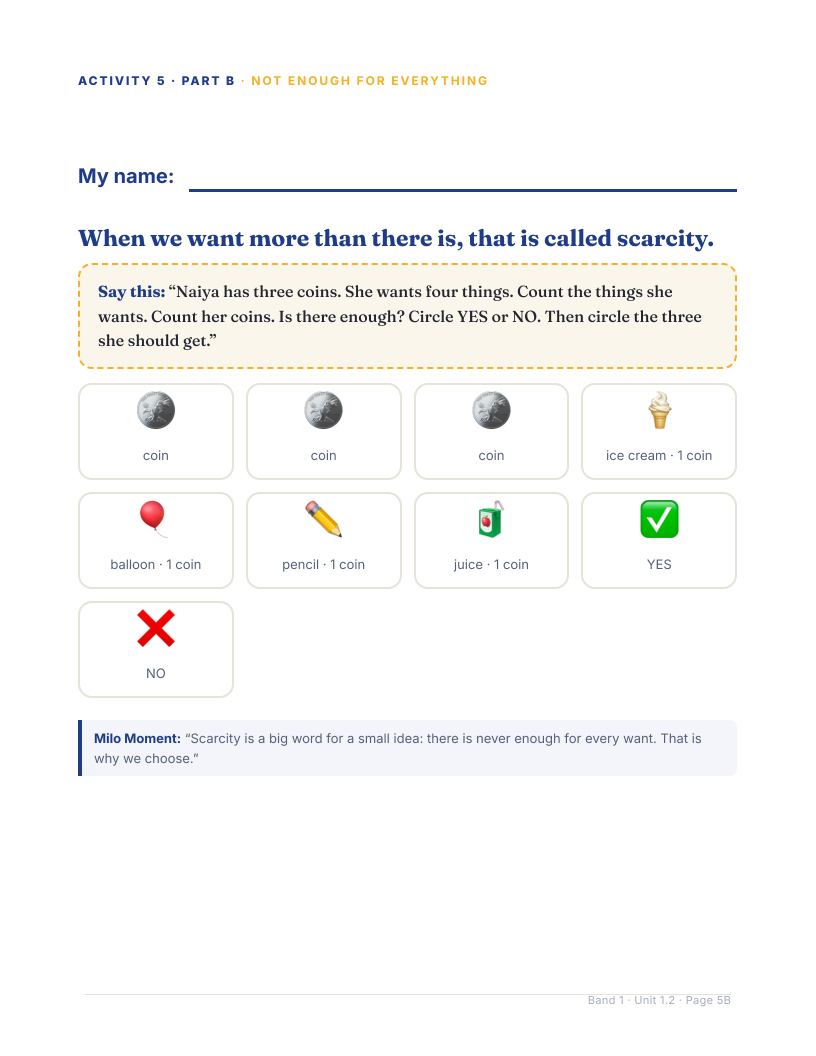
Naiya has three coins and wants four things. Count both, decide whether there is enough, then choose which three she should get.
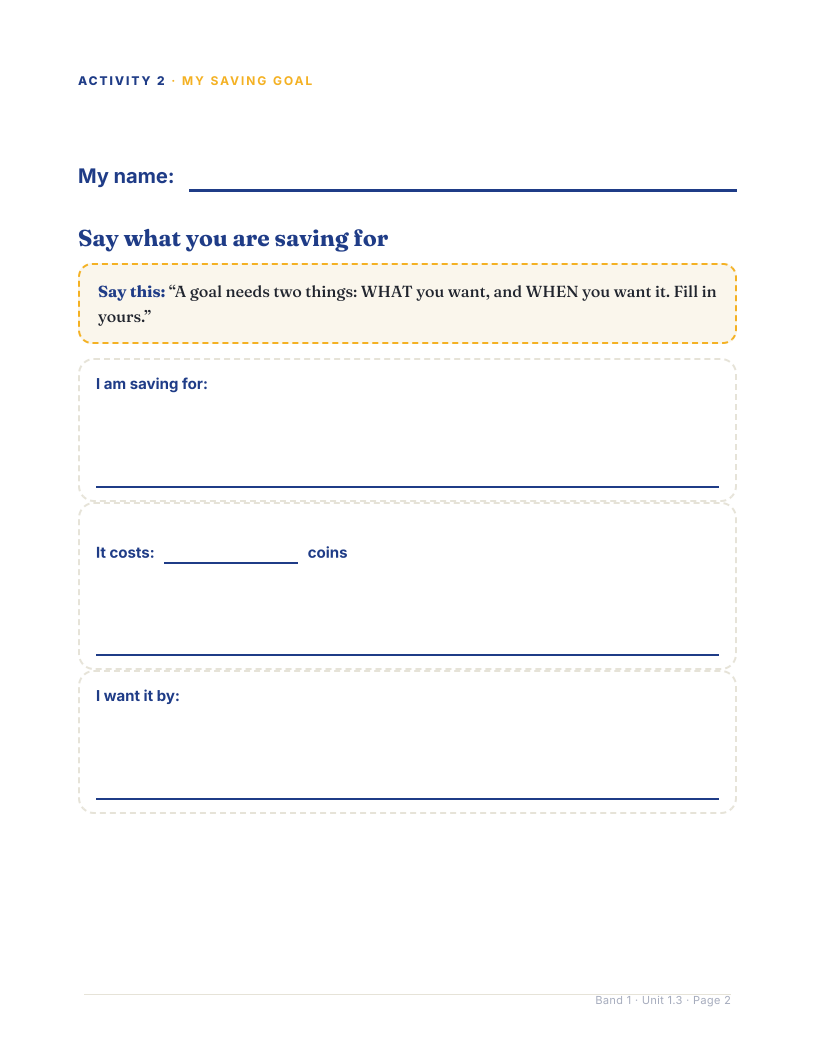
Name one thing you are saving for, what it costs, and when you want it by. A goal a child can say out loud is a goal they can keep.
Where these come from
Each sheet is one activity from a Financial Foundations™ unit of 10 to 12 lessons, with teacher scripts, family letters and a checkpoint.