
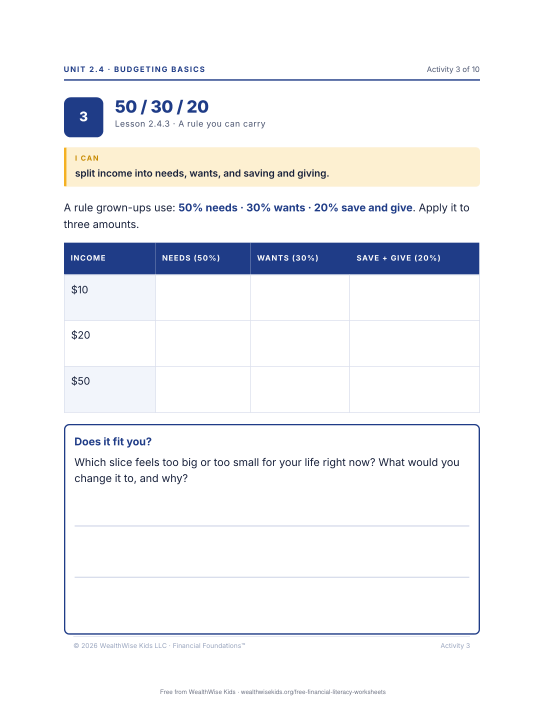
50 / 30 / 20
A first budget. Split $10, $20 and $50 into needs, wants, and save-and-give, then decide whether the rule fits your own life and what you would change.
3rd to 5th Grade · Free · With answers
The arithmetic arrives: dividing to compare prices, splitting a budget, working out how many weeks a goal will take. Every sheet below is a real activity, unchanged, from our K–12 curriculum — one page, with an answer page behind it.
No account. No email. Nothing collected about your child.
A first budget. Split $10, $20 and $50 into needs, wants, and save-and-give, then decide whether the rule fits your own life and what you would change.
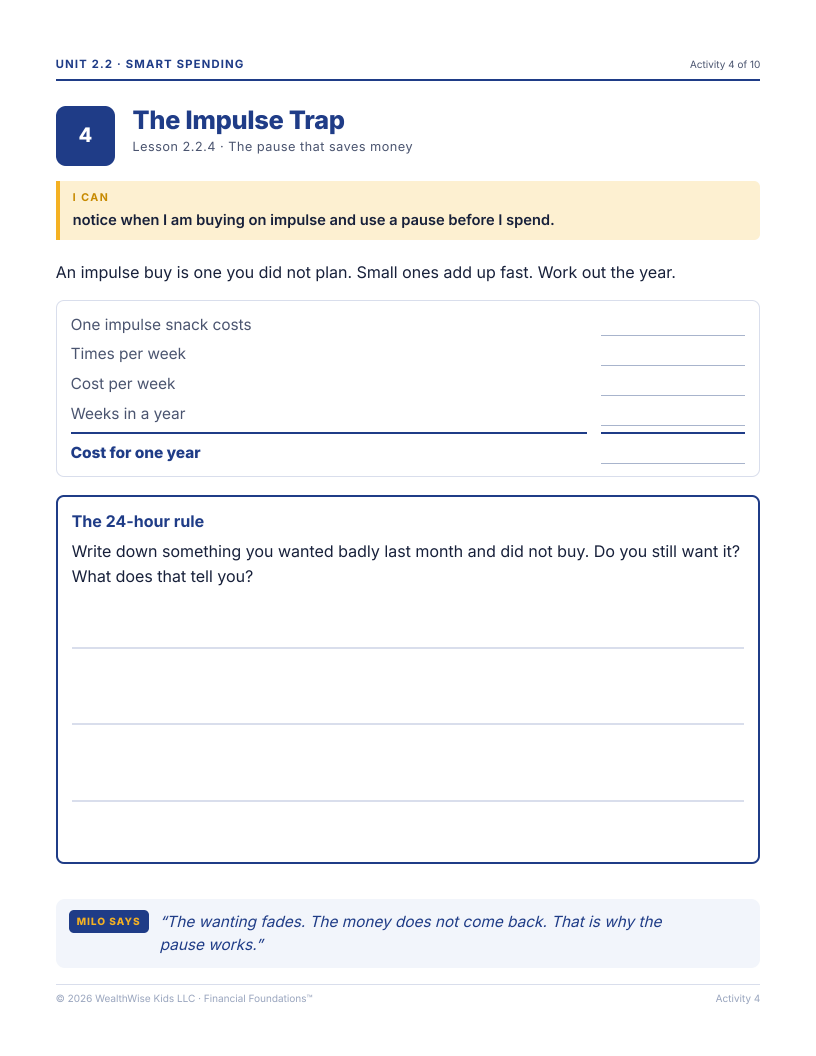
Take one small thing you buy without planning, multiply it out across a year, and then try the 24-hour rule on something you wanted last month.
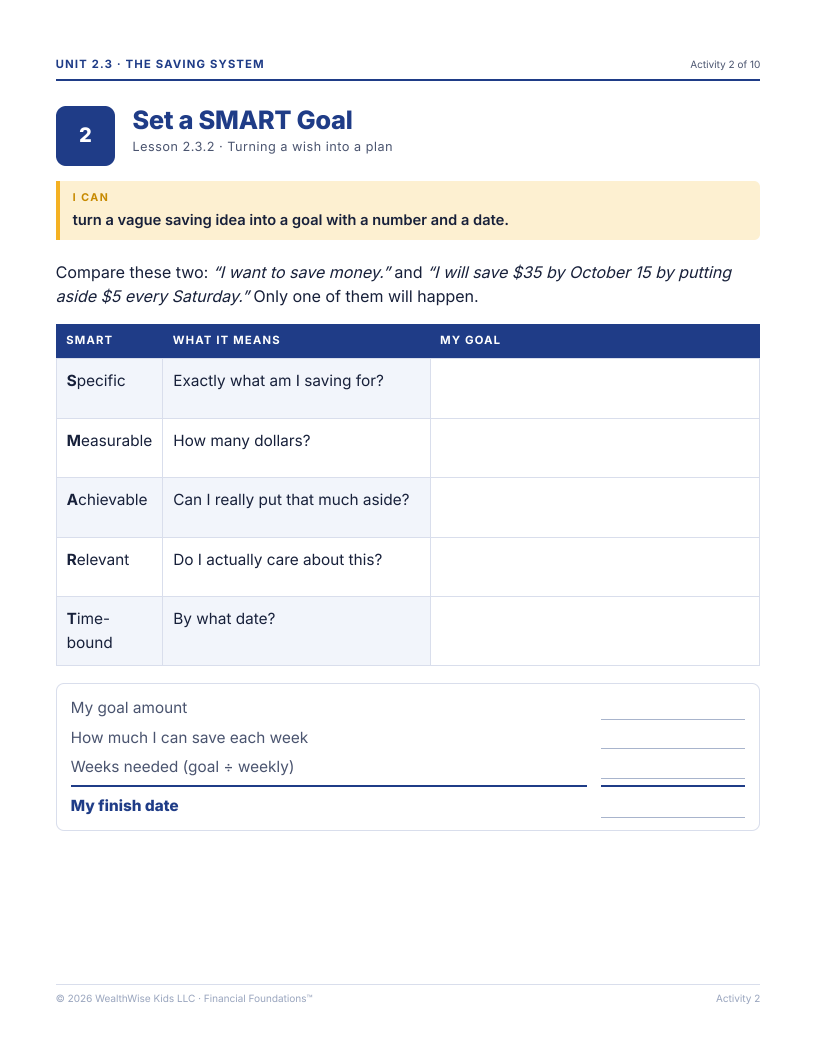
Turn “I want to save money” into a goal with a number and a date, then work out how many weeks it takes and when you will finish.
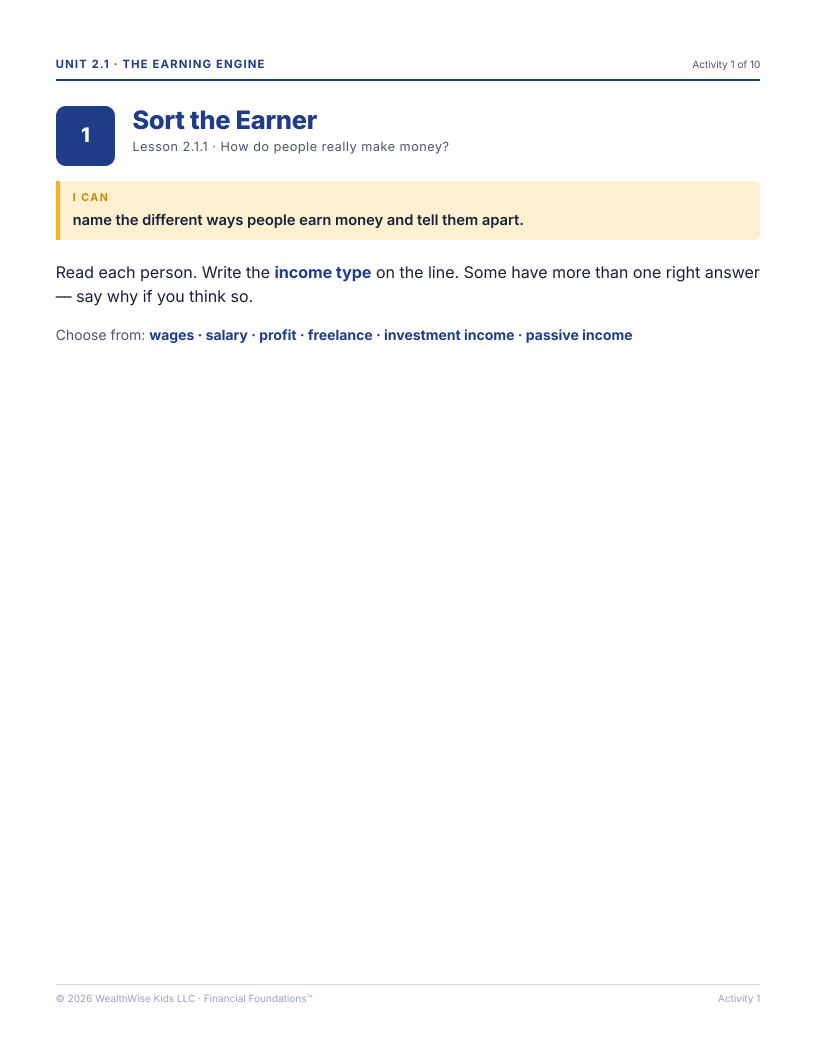
Eight people, eight ways of getting paid. Read each one and name the income type — wages, salary, profit, freelance, investment or passive.
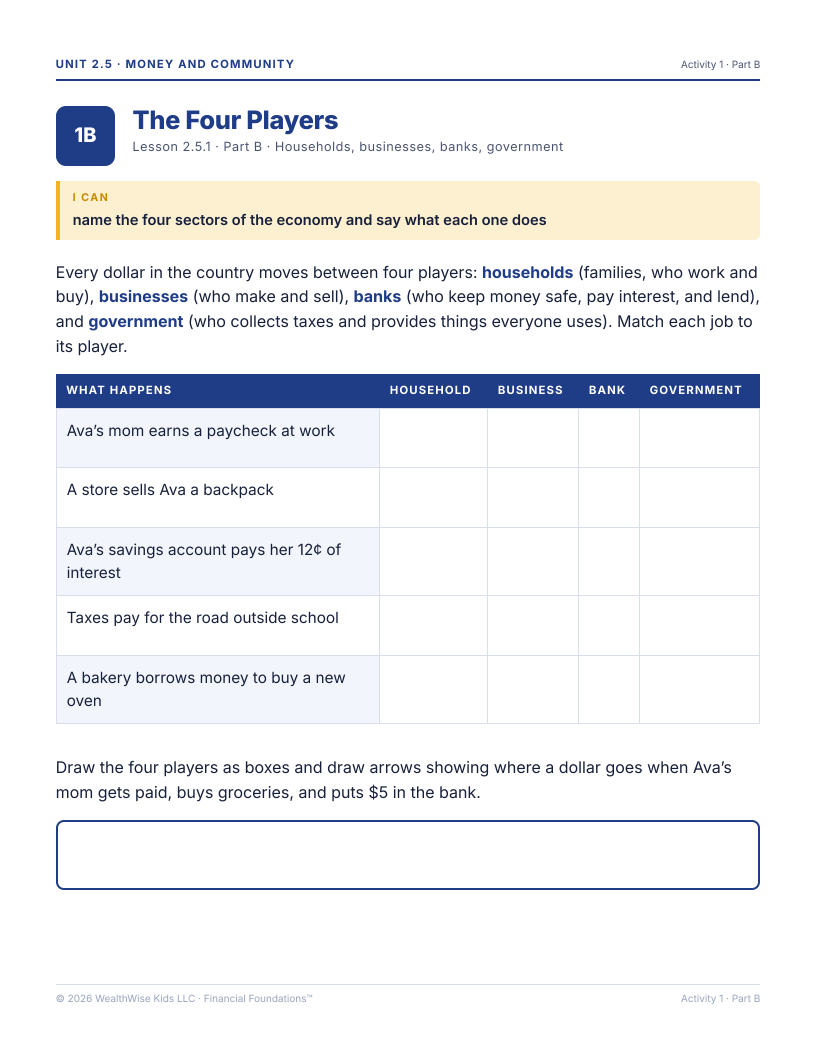
Households, businesses, banks and government. Match five everyday events to the player behind each, then draw where a dollar actually goes.
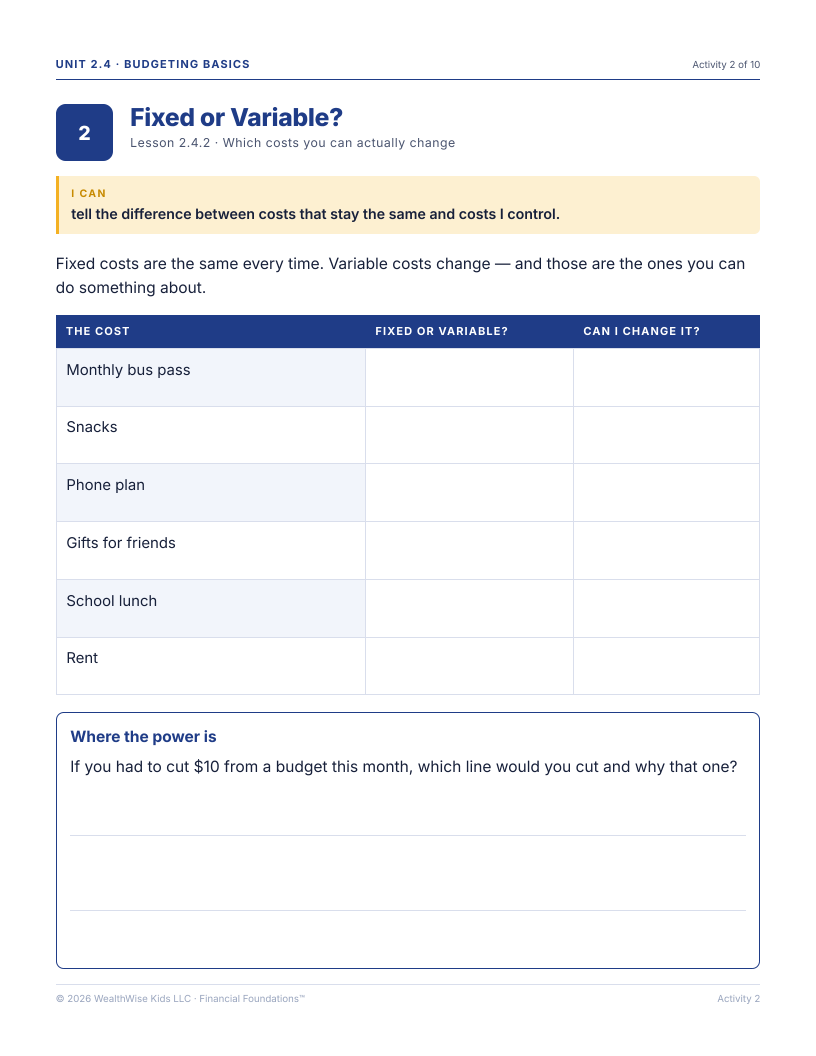
Six real costs. Sort each into fixed or variable, say whether you could actually change it, then pick the one you would cut.
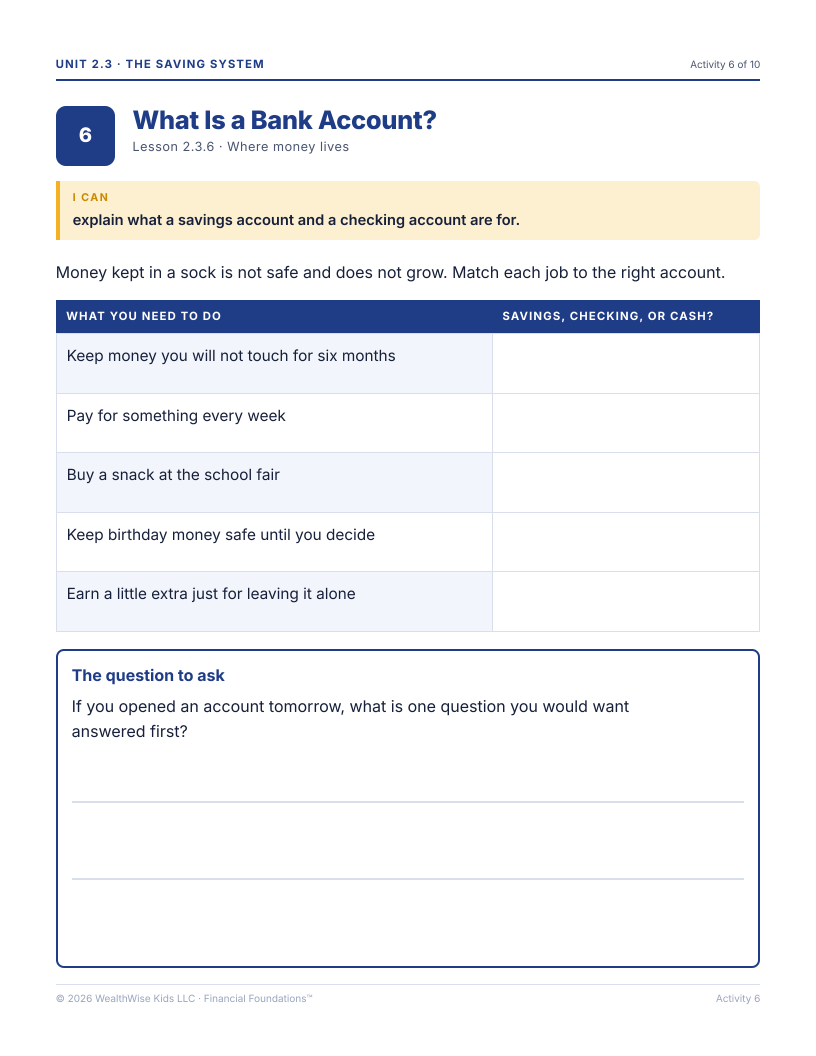
Five everyday jobs for money. For each one, decide whether it belongs in savings, in checking, or in cash.
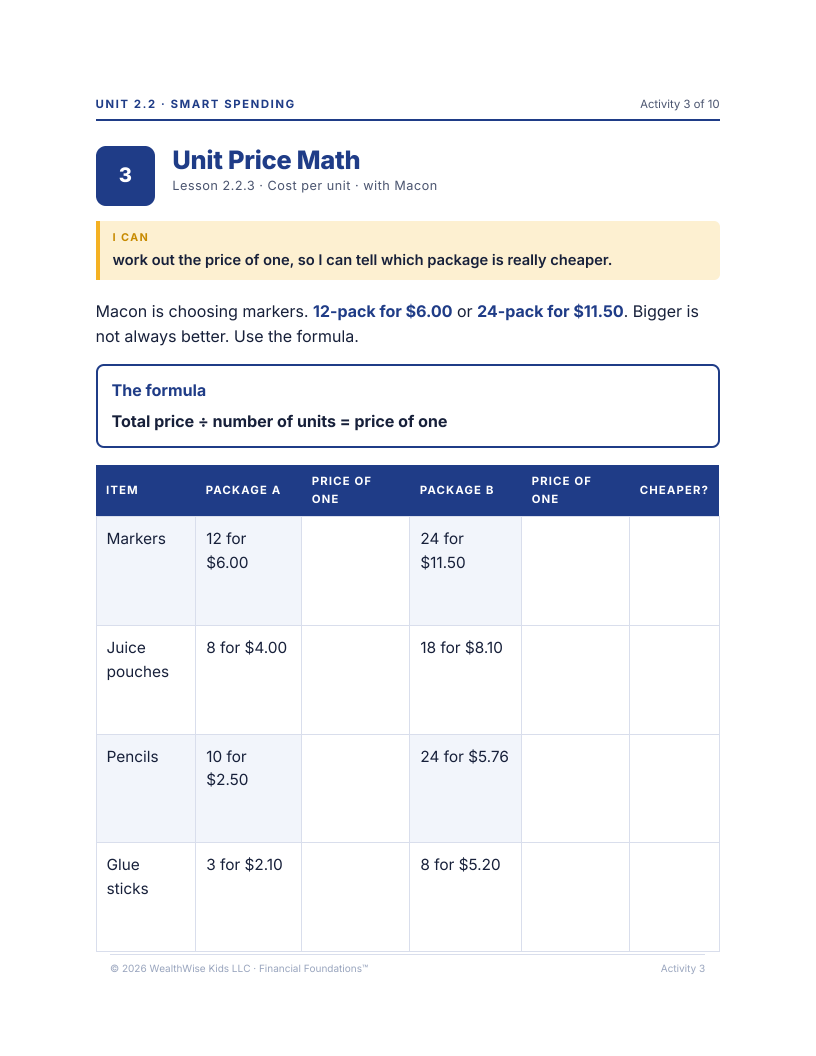
Four pairs of packages — markers, juice, pencils, glue sticks. Work out the price of one in each, then say which package is really cheaper.
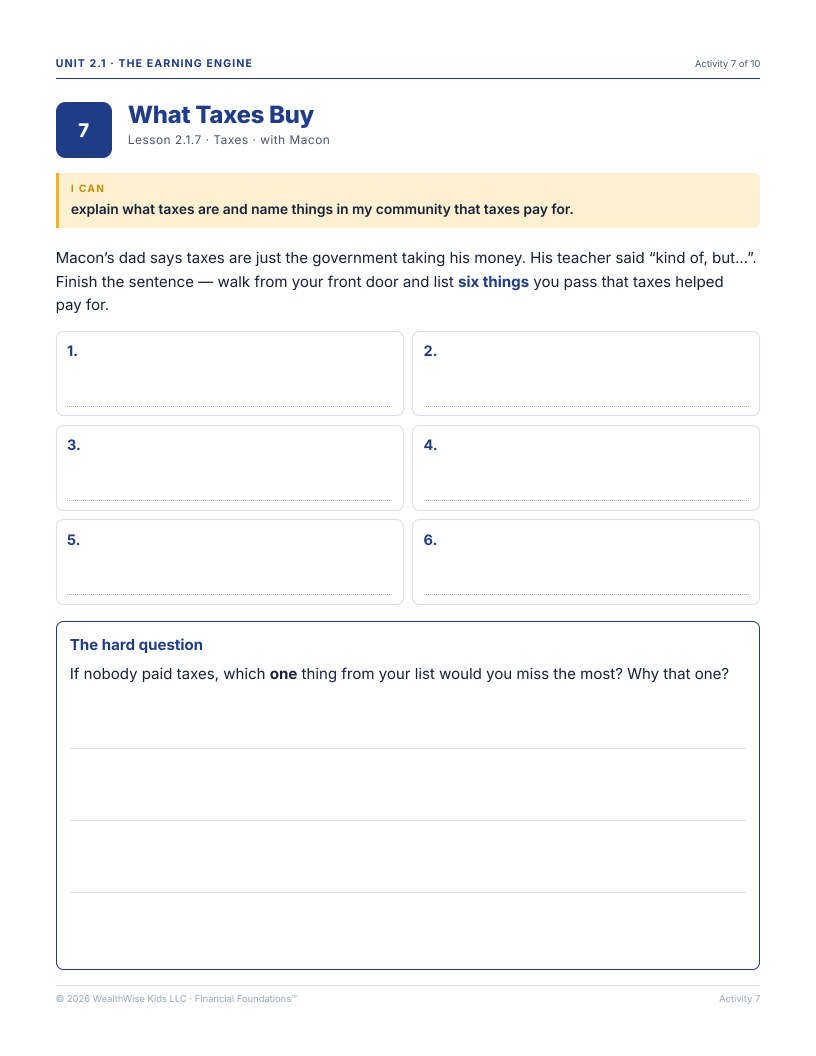
Walk out of your front door and list six things you pass that taxes helped pay for. Then say which one you would miss the most, and why that one.
Where these come from
Each sheet is one activity from a Financial Foundations™ unit of 10 to 12 lessons, with teacher scripts, family letters and a checkpoint.