
Grades K–2 · 20–30 minutes, including the conversation
Need or Want?
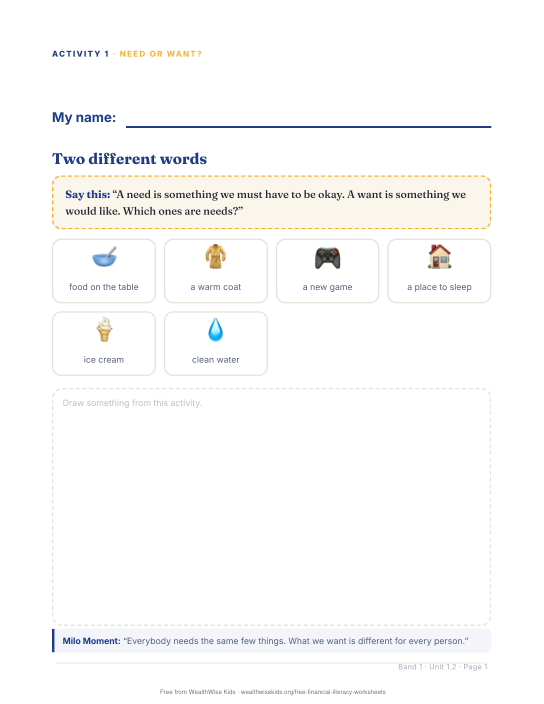
Six everyday things to sort into needs and wants, then one of each to draw. It's where money starts for a young child: two different words, and knowing which is which.
Money Basics · Free · With answers
Where money starts: what it is, what it buys, and why you cannot have everything. These are the first conversations, and they work long before a child can do the arithmetic.
Answer page on every sheet. No account, no email.
Grades K–2 · 20–30 minutes, including the conversation
Six everyday things to sort into needs and wants, then one of each to draw. It's where money starts for a young child: two different words, and knowing which is which.
Grades K–2 · 15–20 minutes
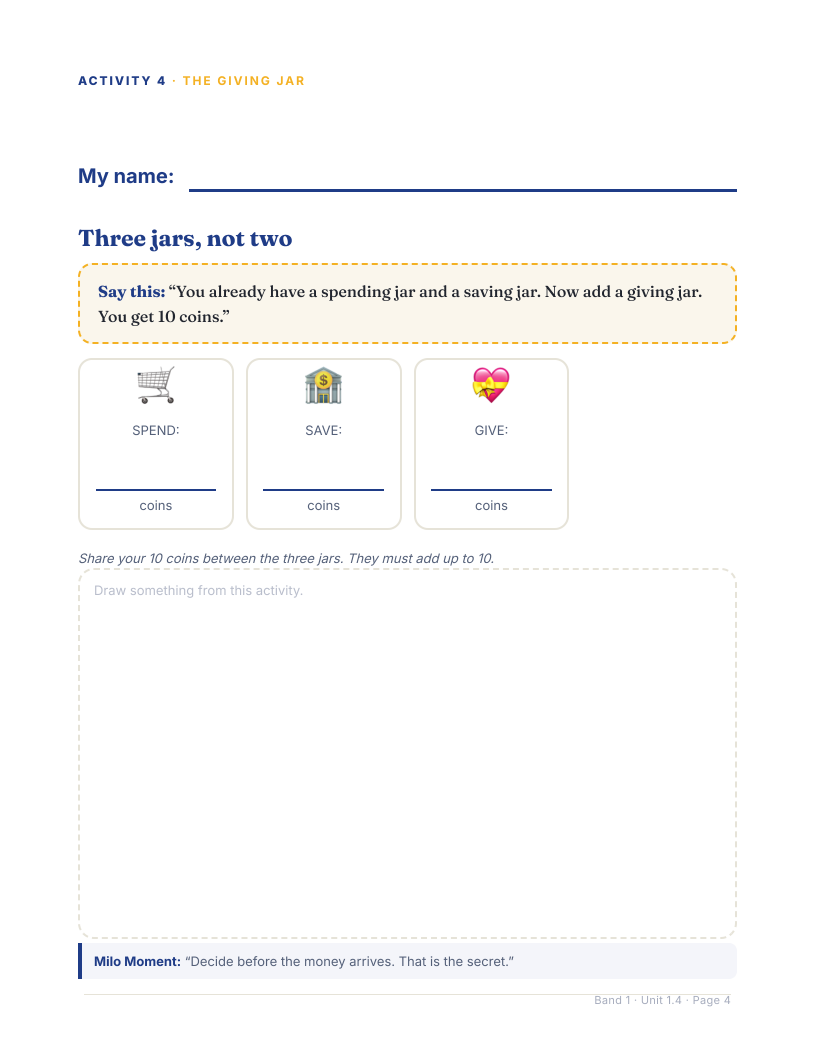
Ten coins, three jars — spend, save and give. Split them however you like, as long as they add up to ten, then say why.
Grades K–2 · 15–20 minutes
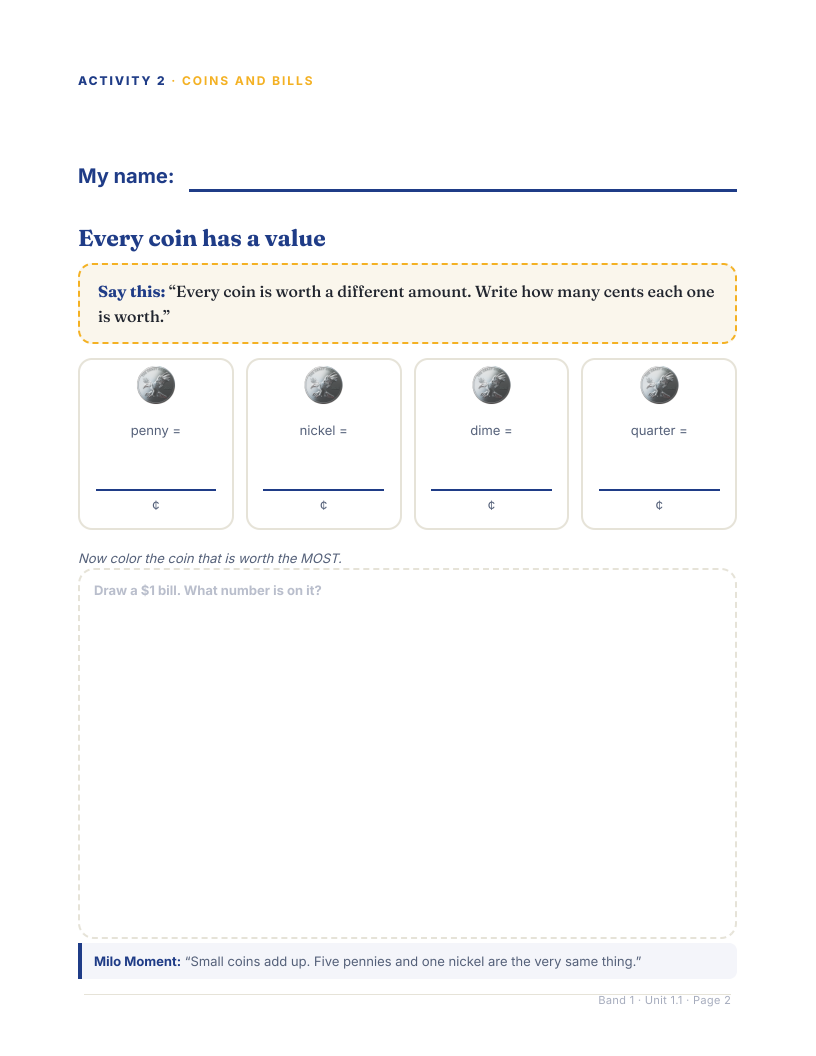
Write what a penny, nickel, dime and quarter are each worth, color the one worth the most, then draw a dollar bill and find the number on it.
Grades K–2 · Five minutes to start, then a month on the fridge
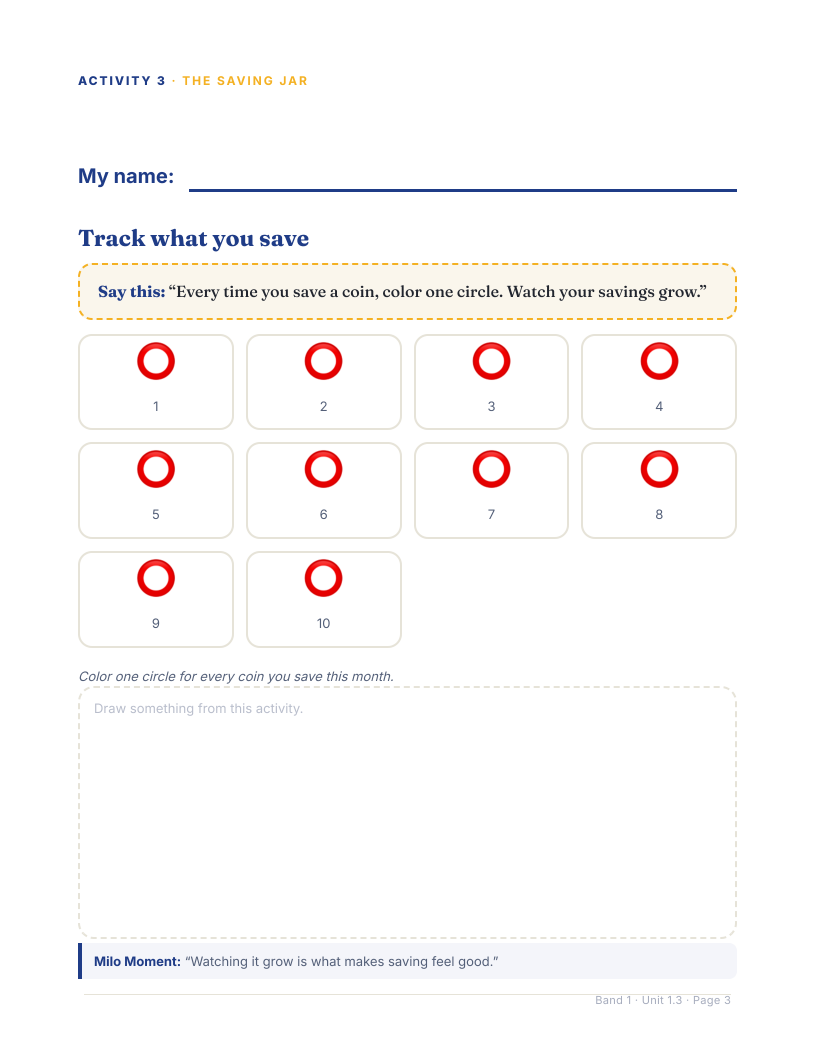
Ten circles. Color one in every time you save a coin, and watch a month of saving turn into something you can see.
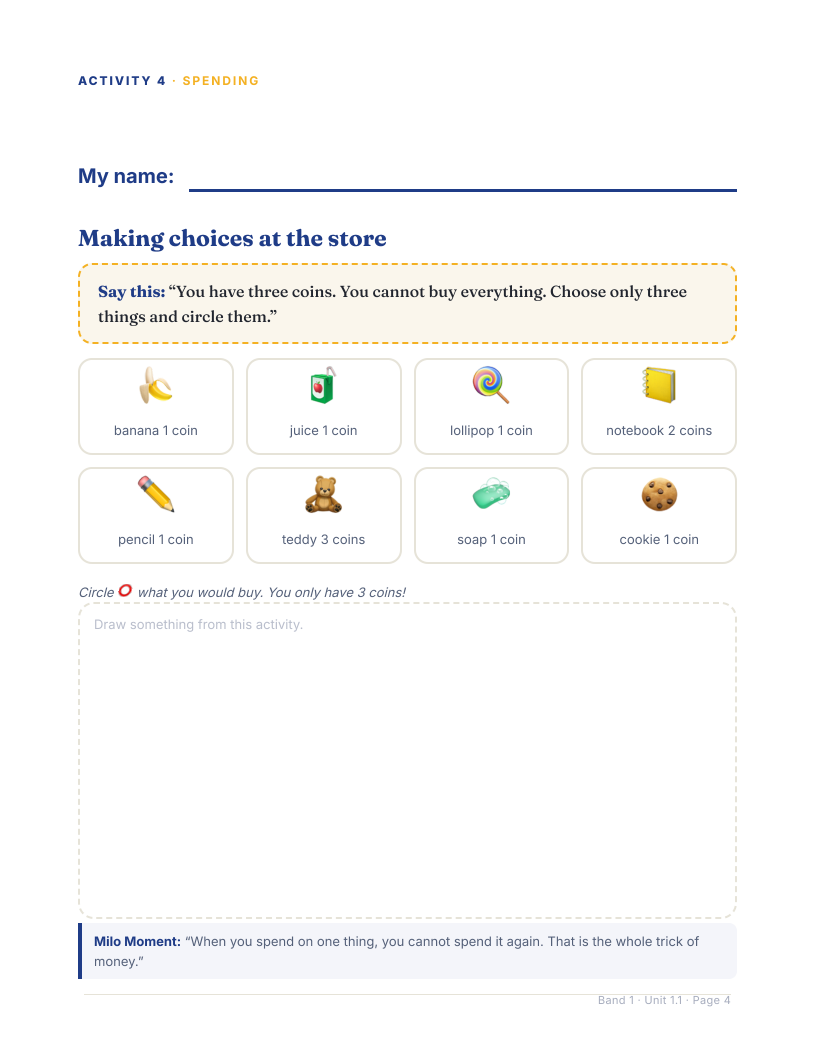
Grades K–2 · 15–20 minutes
Three coins and eight things on the shelf, priced one to three coins. Circle what you would buy — and find out that the teddy costs everything.
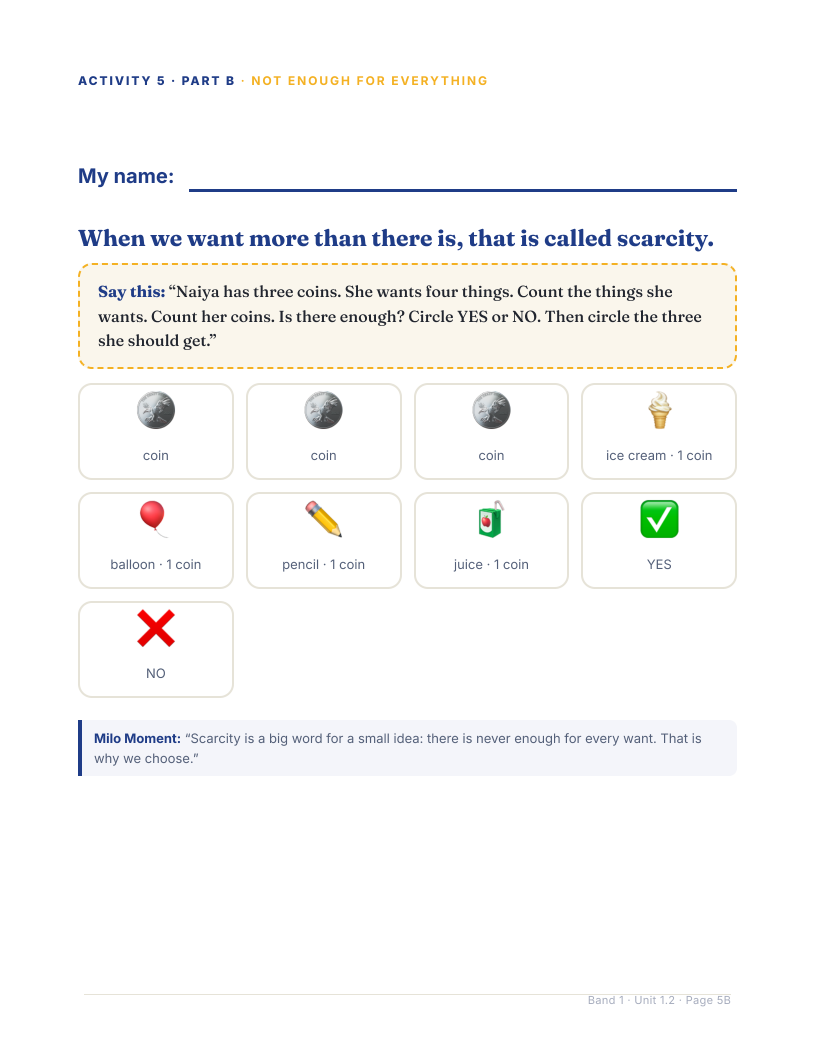
Grades K–2 · 15–20 minutes
Naiya has three coins and wants four things. Count both, decide whether there is enough, then choose which three she should get.
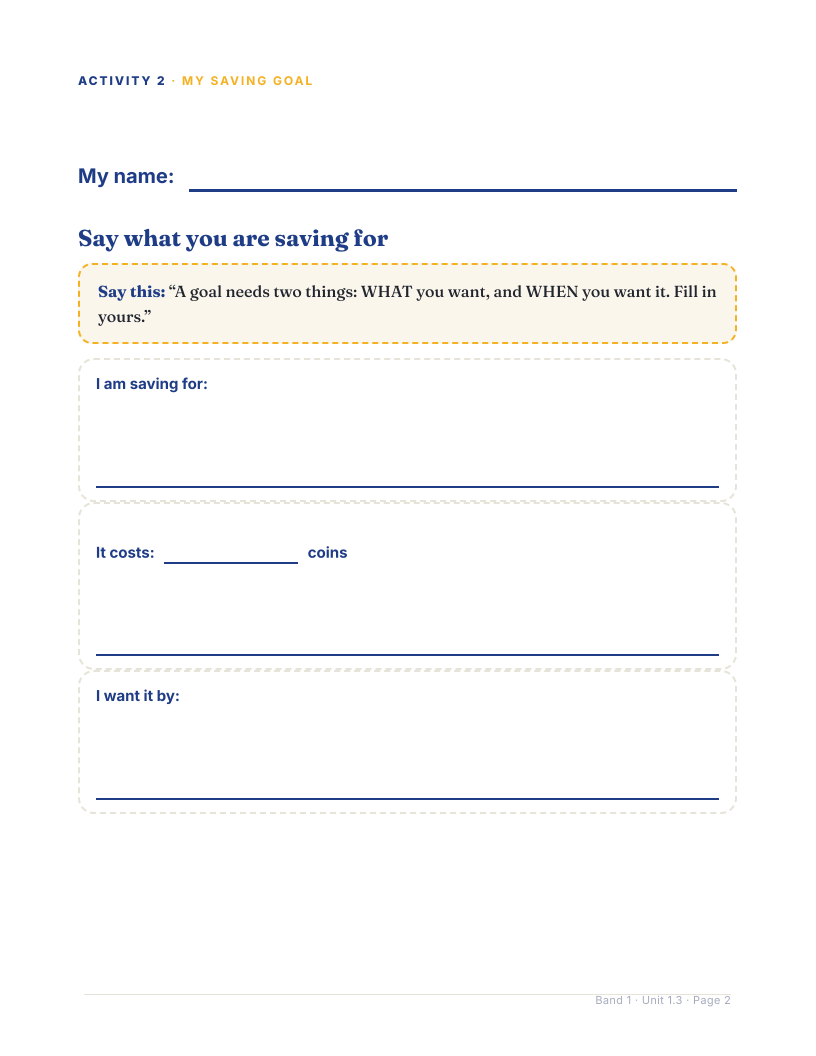
Grades K–2 · 15–20 minutes
Name one thing you are saving for, what it costs, and when you want it by. A goal a child can say out loud is a goal they can keep.
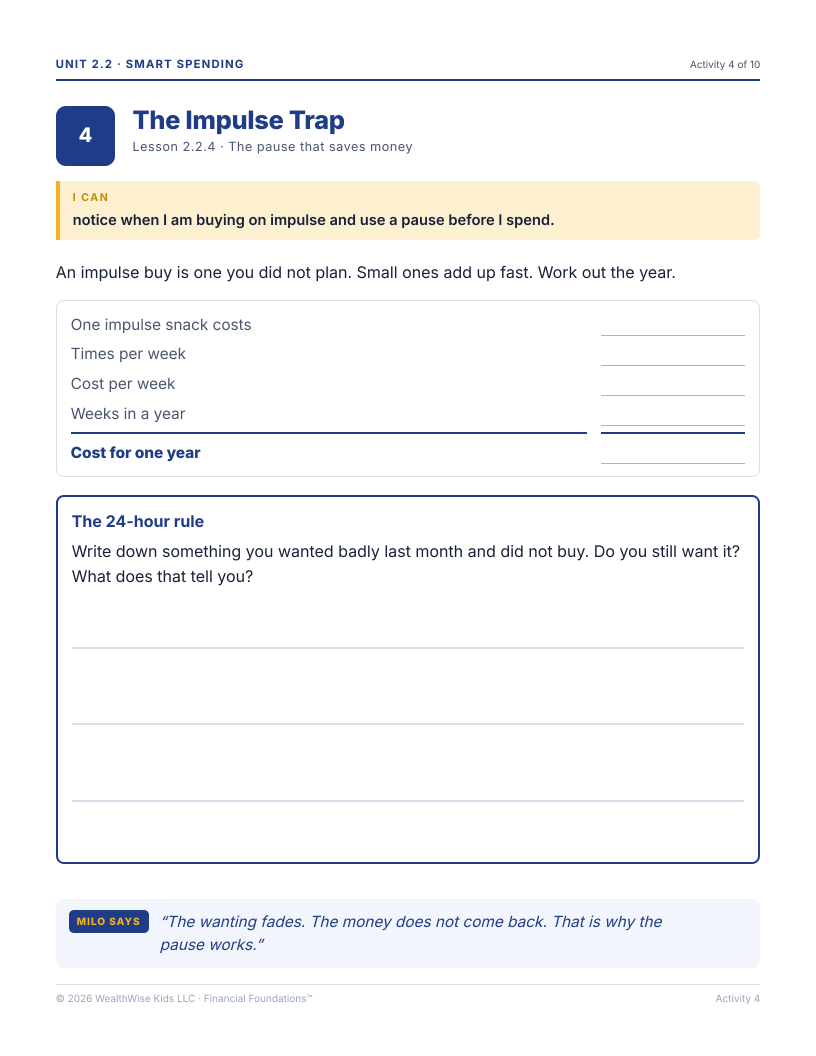
Grades 3–5 · 25–30 minutes
Take one small thing you buy without planning, multiply it out across a year, and then try the 24-hour rule on something you wanted last month.
Grades 6–8 · 25–30 minutes
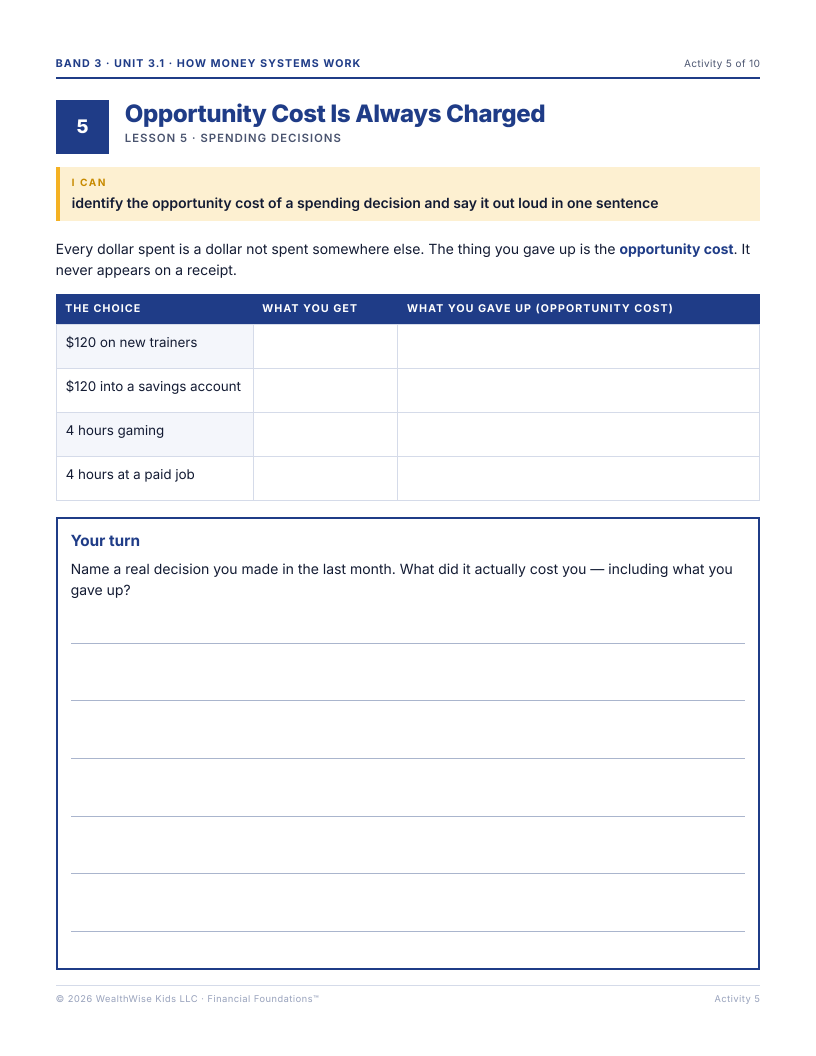
Four choices, each with something gained and something given up — including the sensible ones. Then name a real decision from your own last month.
Real-life skills for everyday decisions
See them ›Exploring work, money & opportunity
See them ›Big ideas, made simple
See them ›Simulations, case studies & more
See them ›Where these come from
Each sheet is one activity from a Financial Foundations™ unit of 10 to 12 lessons, with teacher scripts, family letters and a checkpoint.