
Grades 3–5 · 25–30 minutes
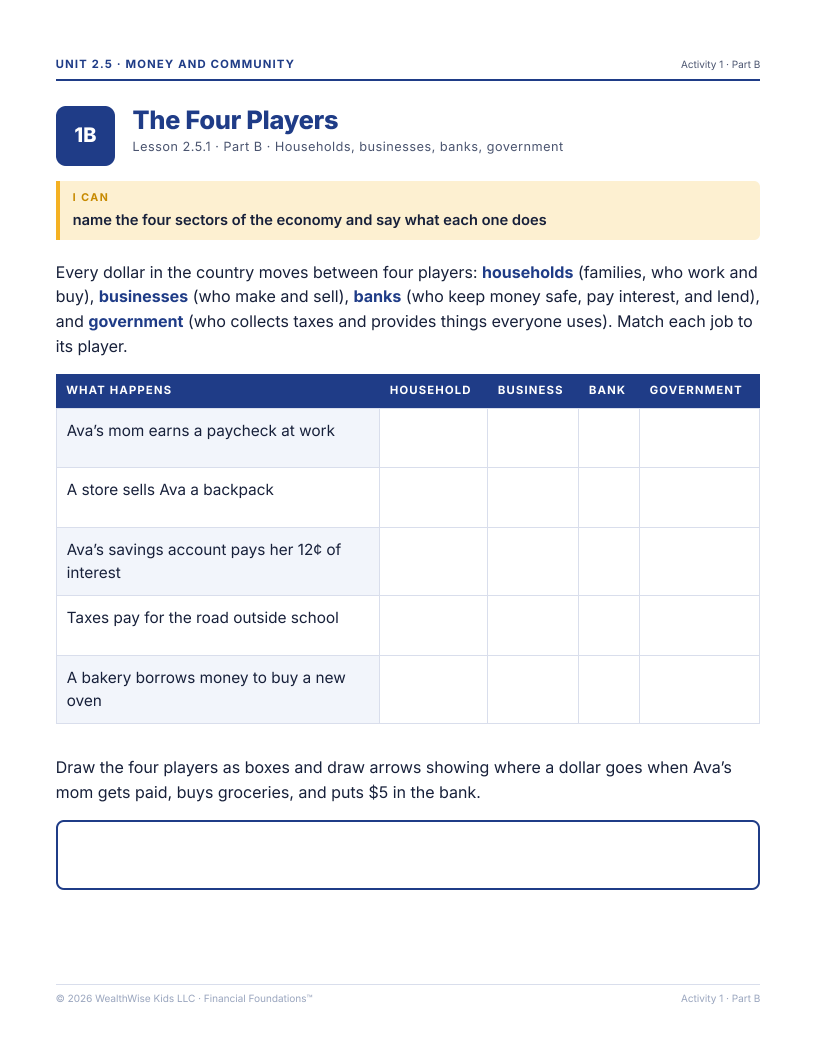
The Four Players
Households, businesses, banks and government. Match five everyday events to the player behind each, then draw where a dollar actually goes.
Real-World Scenarios · Free · With answers
Credit, scams, insurance, student loans and the price of borrowing. The situations a student will actually meet, worked through before they meet them.
Answer page on every sheet. No account, no email.
Grades 3–5 · 25–30 minutes
Households, businesses, banks and government. Match five everyday events to the player behind each, then draw where a dollar actually goes.
Grades 6–8 · 25–35 minutes
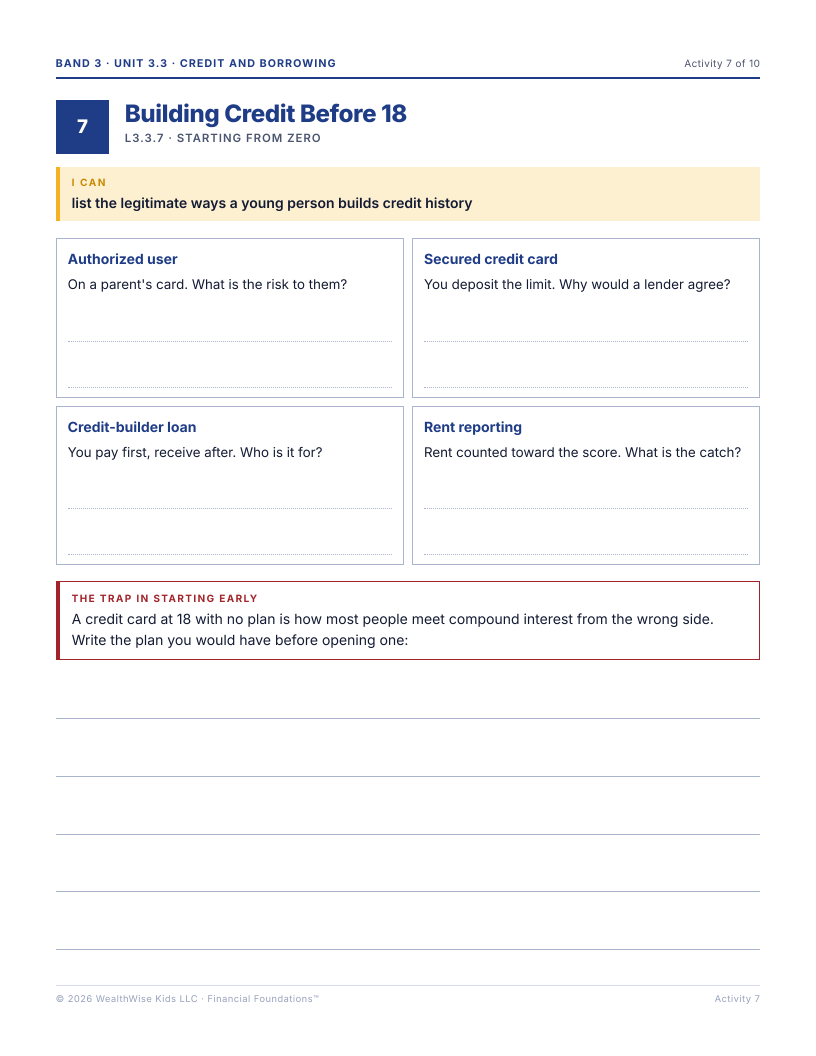
Four legitimate ways a young person starts a credit history, and the catch in each one — including who is carrying the risk.
Grades 6–8 · 30–35 minutes
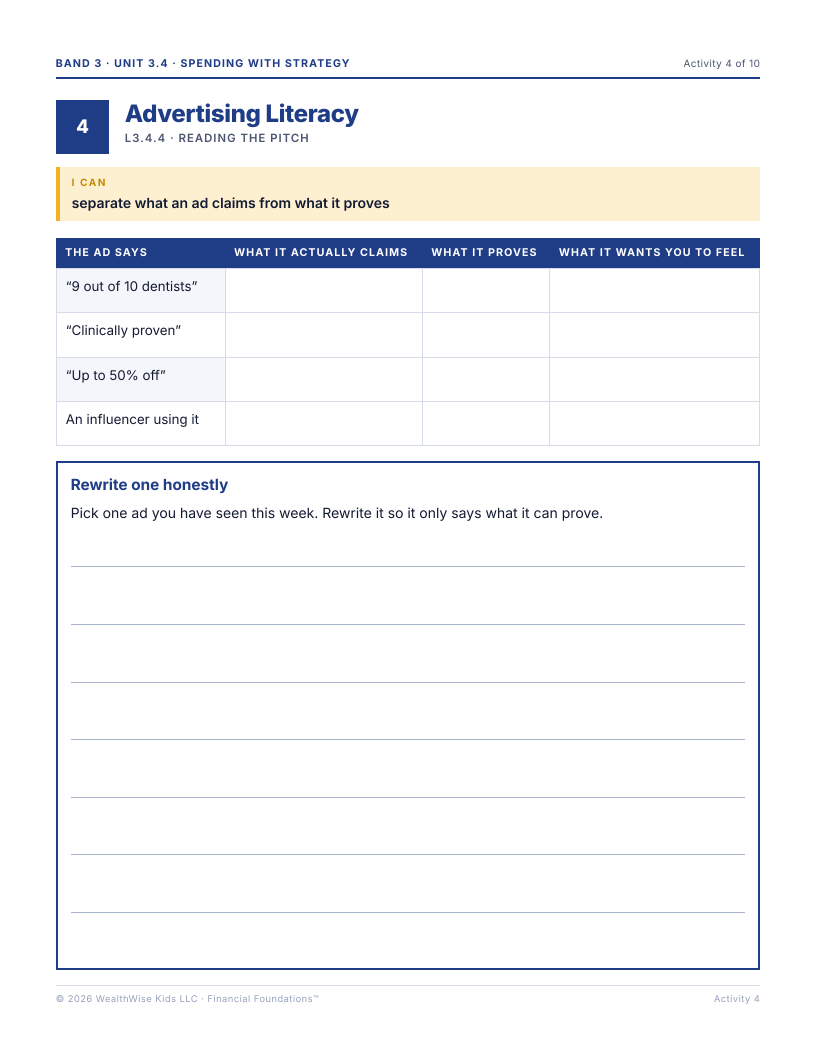
Four real advertising lines. For each one: what it actually claims, what it proves, and what it wants you to feel. Then rewrite one honestly.
Grades 6–8 · 30–35 minutes
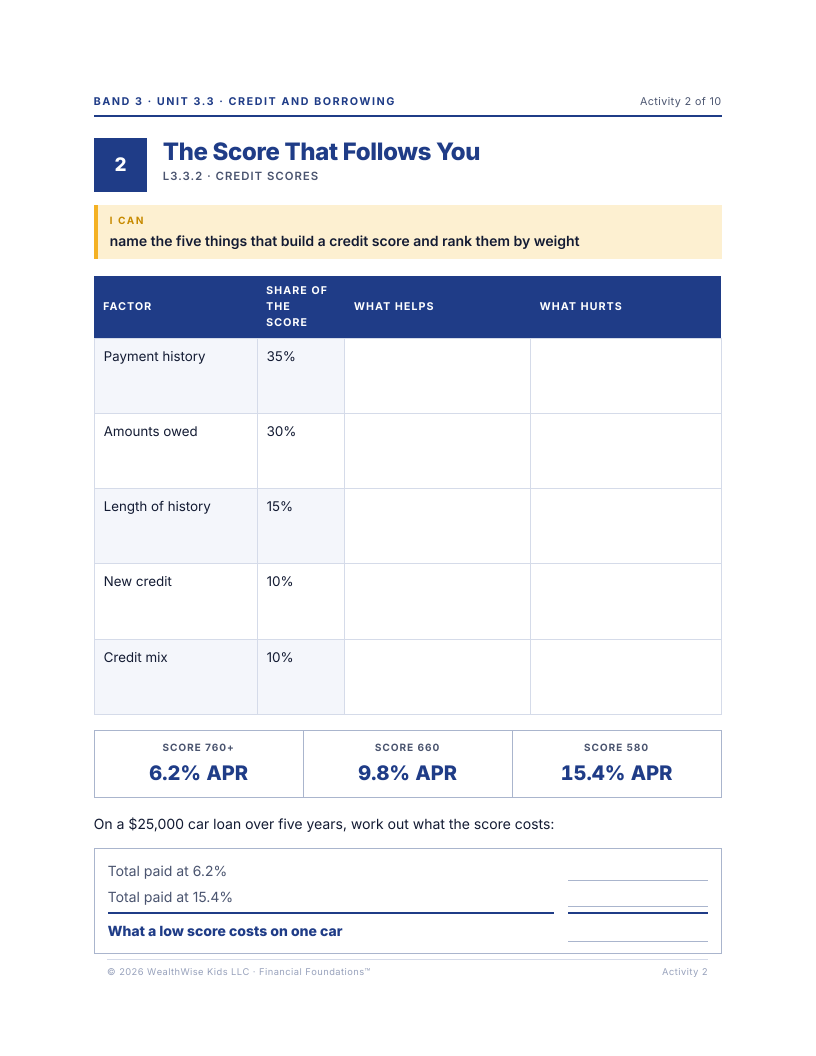
The five things that build a credit score and what each is worth, then the same $25,000 car loan priced at three different scores.
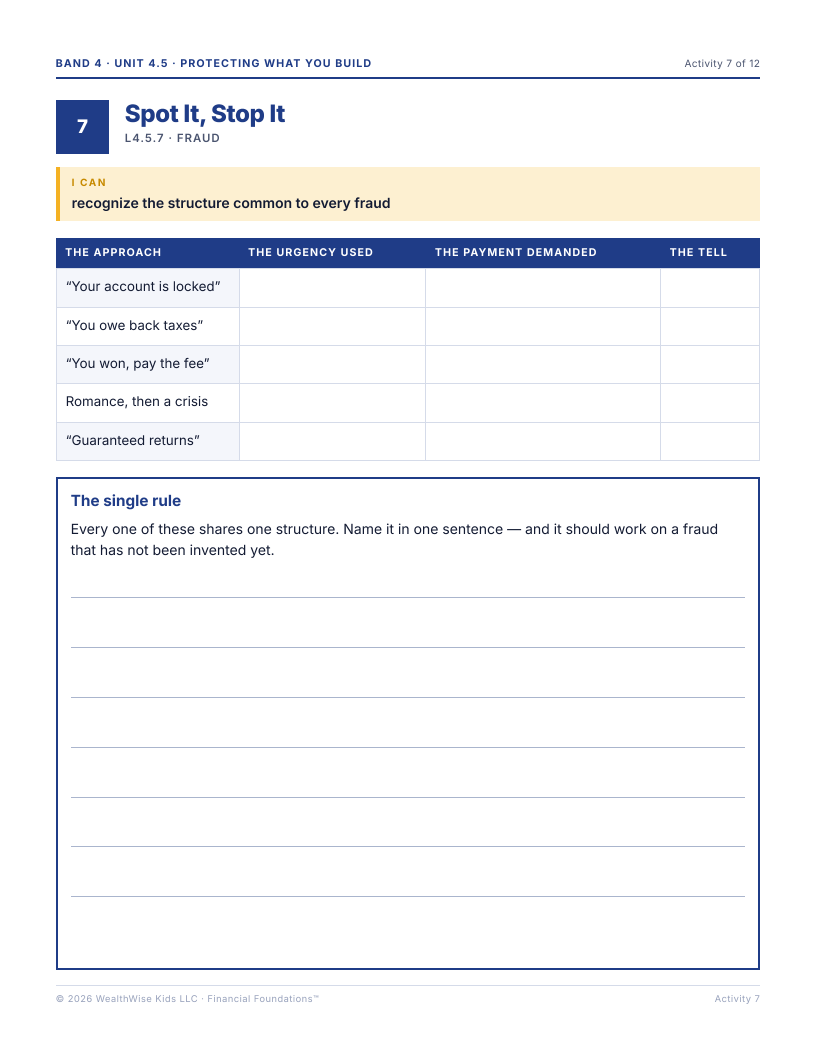
Grades 9–12 · 30–40 minutes
Five common frauds broken into approach, urgency, payment and tell — then name the one structure they all share, in a sentence that works on a scam nobody has invented yet.
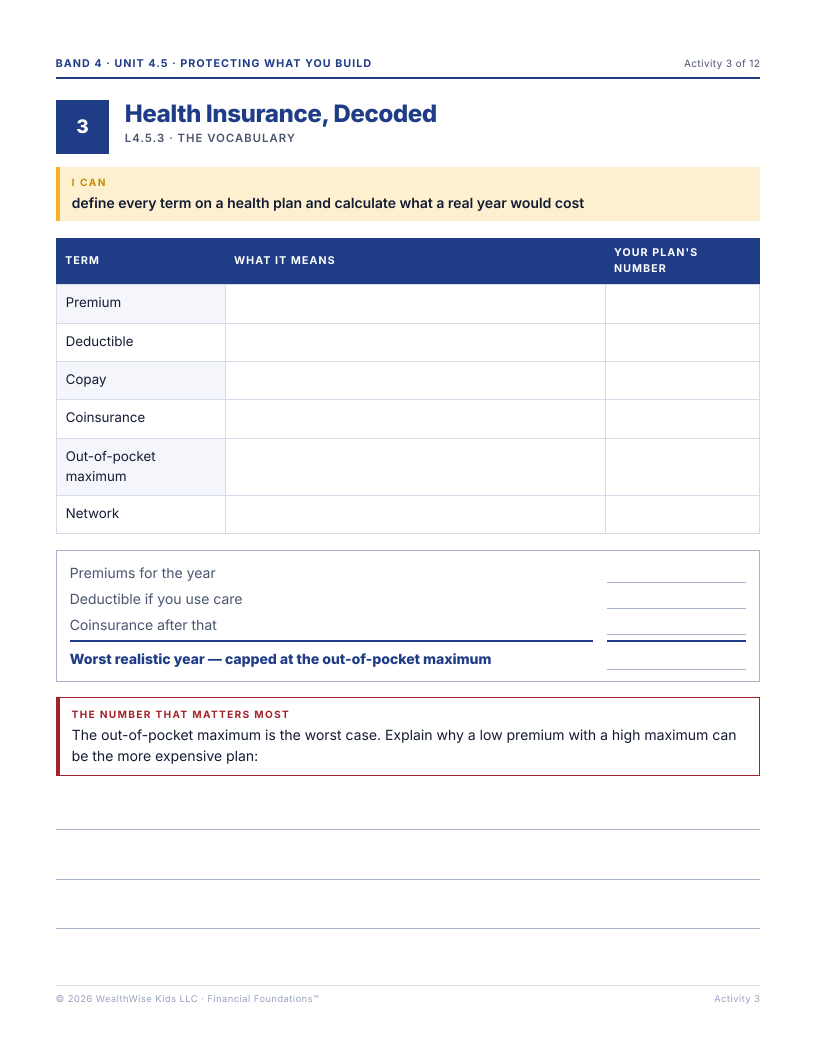
Grades 9–12 · 35–45 minutes
Define the six words on every health plan, then work out what a real year actually costs — including the year nothing happens.
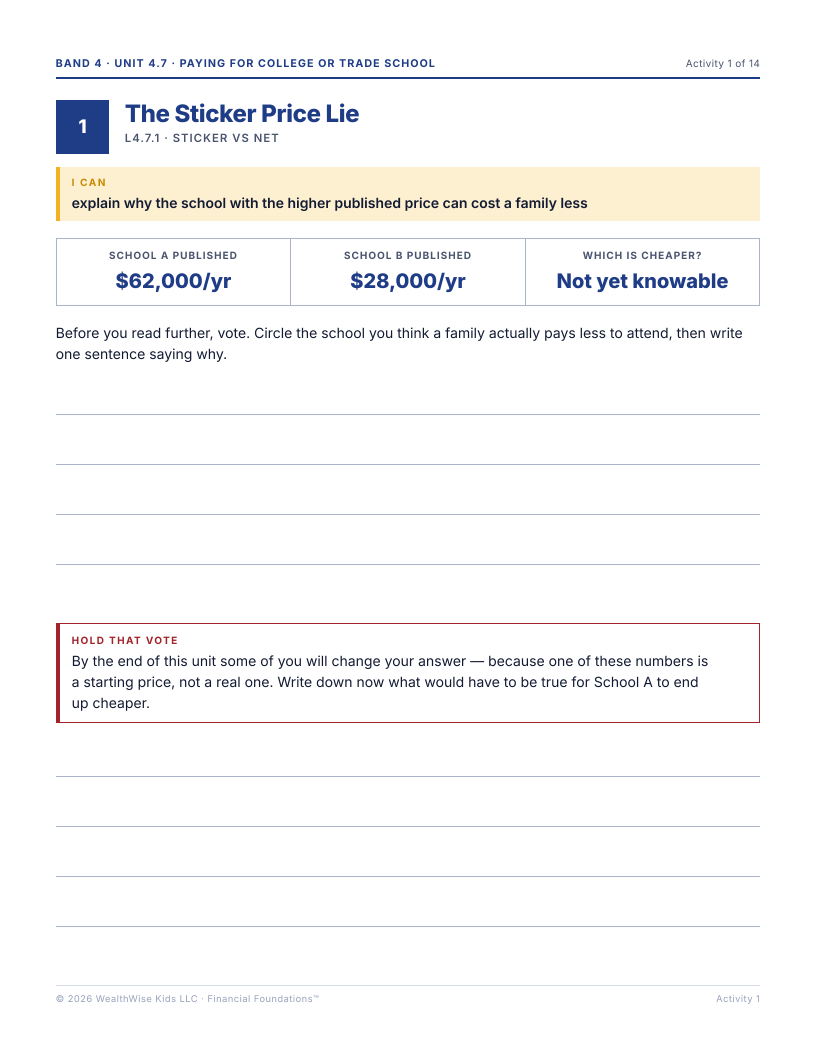
Grades 9–12 · 30–40 minutes
Two schools, $62,000 and $28,000 a year. Vote on which is cheaper, then subtract gift aid and find out that the expensive one costs the family $8,500 a year less.
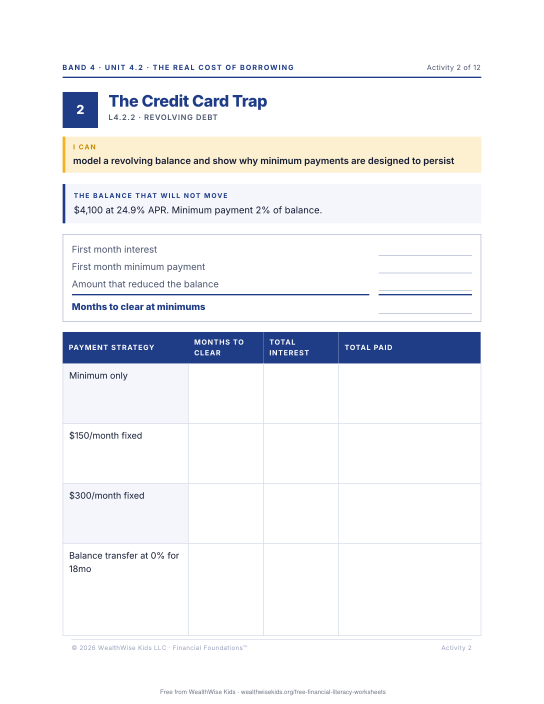
Grades 9–12 · 30–40 minutes
A $4,100 balance at 24.9% APR. Compare paying the minimum, $150 a month, $300 a month and a 0% transfer, and see why the minimum never gets there.
Where these come from
Each sheet is one activity from a Financial Foundations™ unit of 10 to 12 lessons, with teacher scripts, family letters and a checkpoint.