
Grades 3–5 · 25–30 minutes
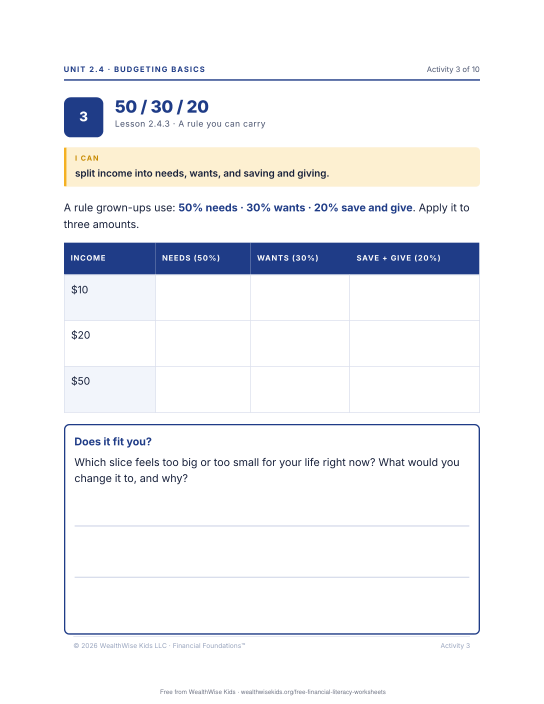
50 / 30 / 20
A first budget. Split $10, $20 and $50 into needs, wants, and save-and-give, then decide whether the rule fits your own life and what you would change.
Budgeting & Financial Math · Free · With answers
A budget is arithmetic with consequences. These sheets put real numbers in front of a student and make them decide what the numbers mean.
Answer page on every sheet. No account, no email.
Grades 3–5 · 25–30 minutes
A first budget. Split $10, $20 and $50 into needs, wants, and save-and-give, then decide whether the rule fits your own life and what you would change.
Grades 3–5 · 20–25 minutes
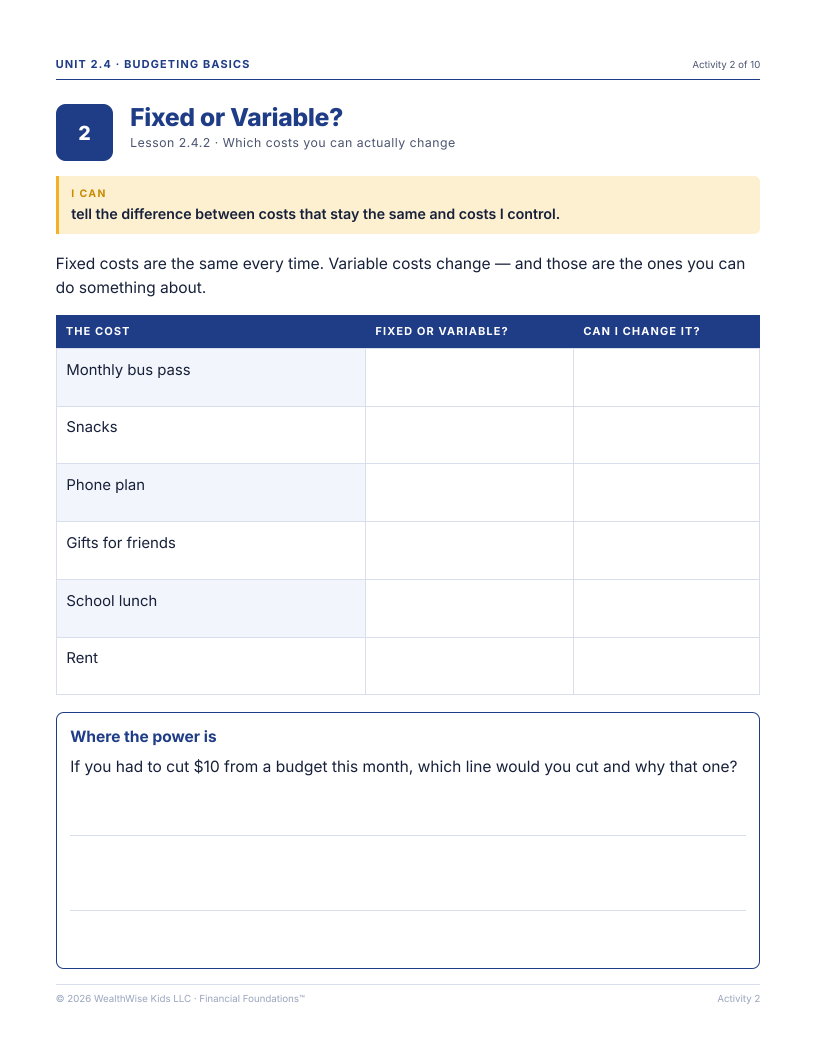
Six real costs. Sort each into fixed or variable, say whether you could actually change it, then pick the one you would cut.
Grades 3–5 · 20–25 minutes
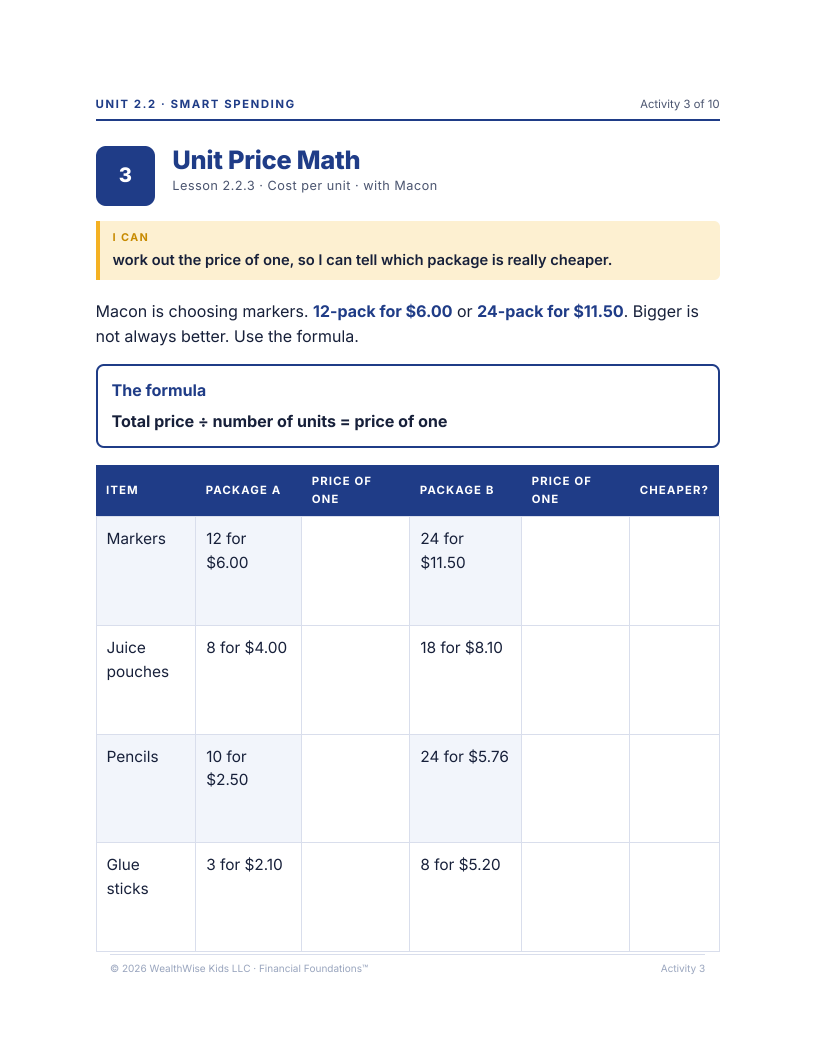
Four pairs of packages — markers, juice, pencils, glue sticks. Work out the price of one in each, then say which package is really cheaper.
Grades 6–8 · 25–35 minutes
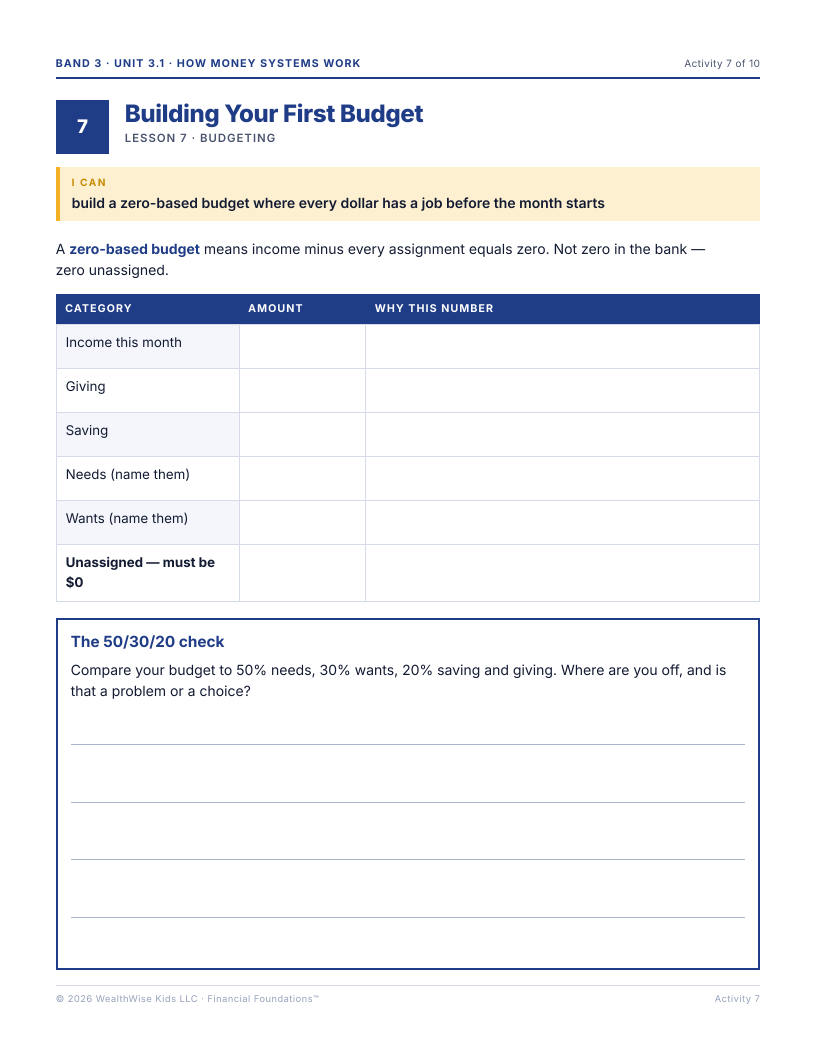
A zero-based budget where every dollar gets a job before the month starts. The last row has to read $0, and there is a column asking why each number is what it is.
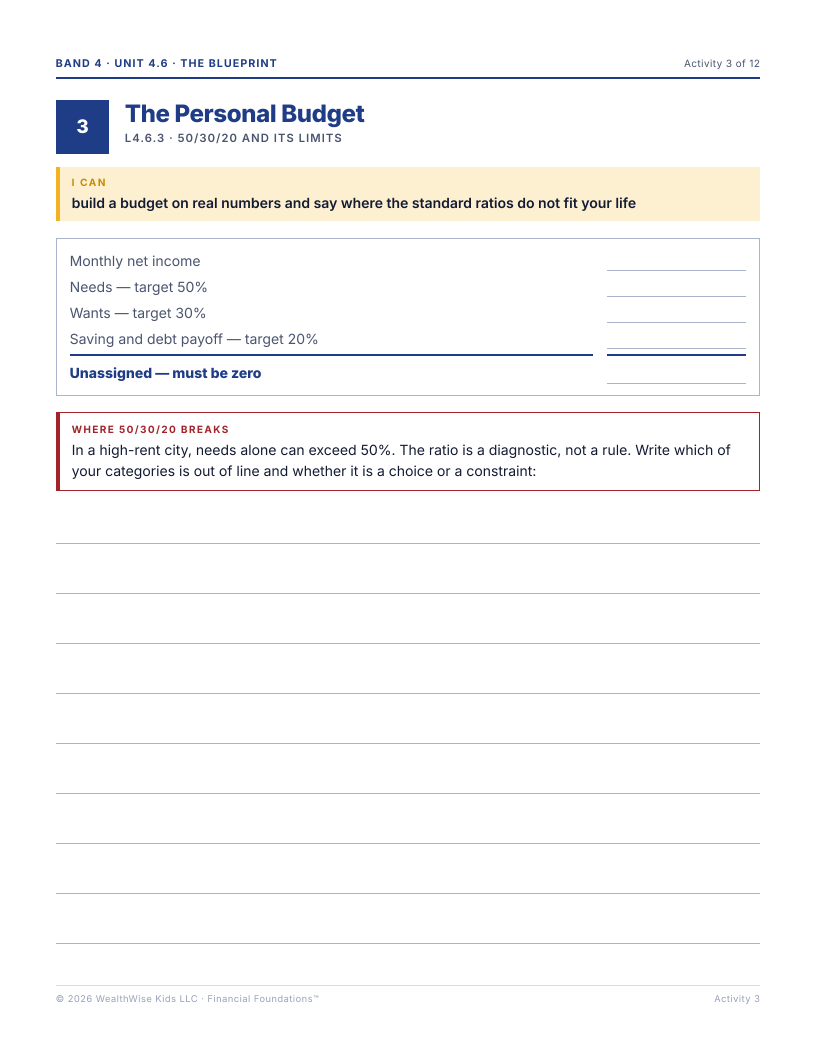
Grades 9–12 · 30–40 minutes
Build a real budget on your own take-home pay against the 50/30/20 targets, get the unassigned line to zero, then say where the rule does not fit your life.
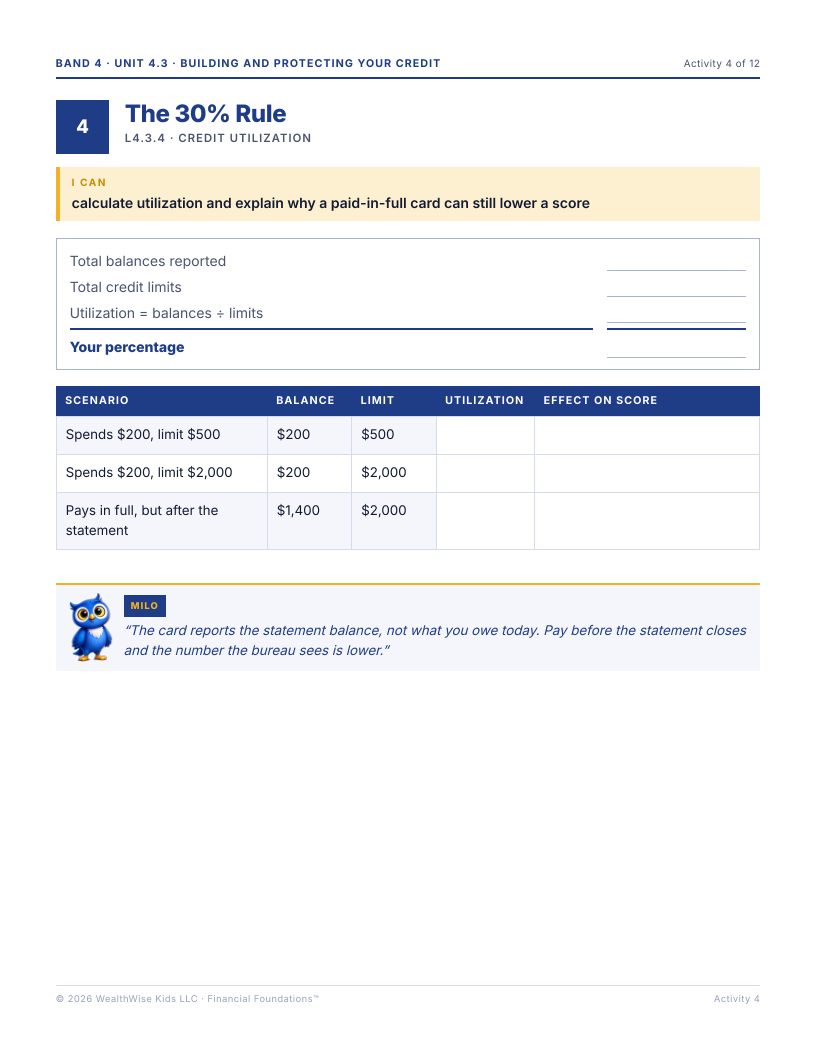
Grades 9–12 · 25–30 minutes
Three cards, the same spending, three different outcomes — including someone who pays in full every month and still reports 70% utilization.
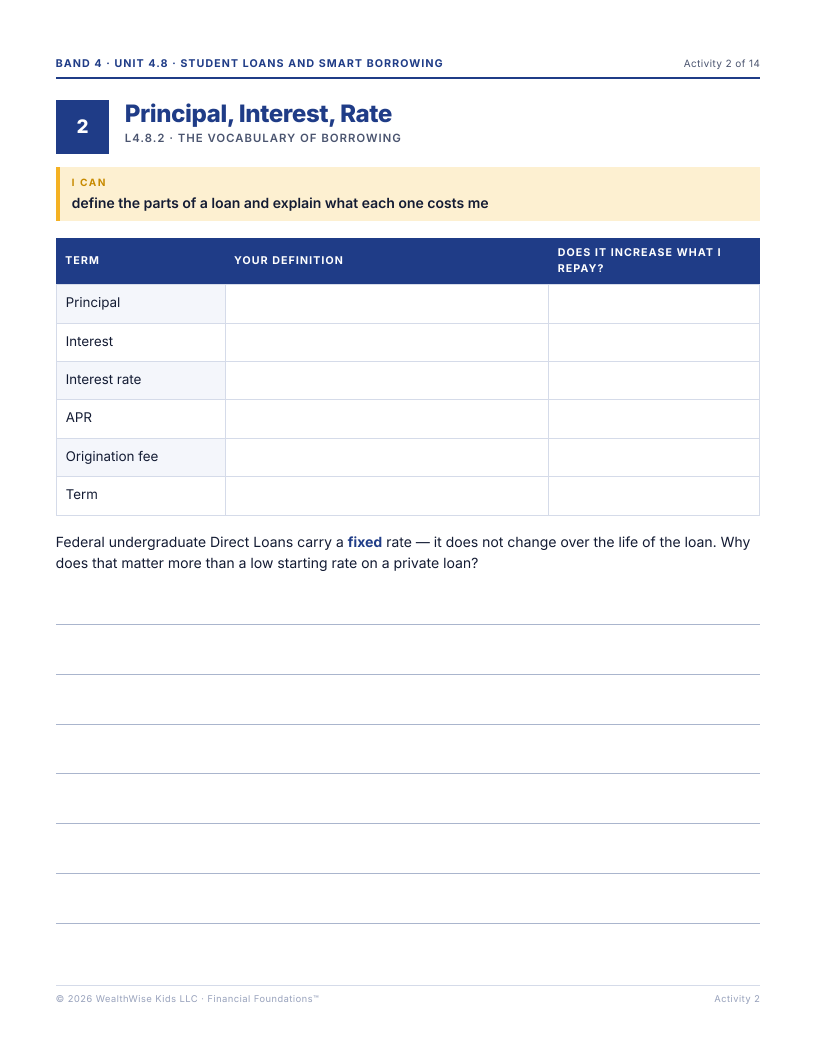
Grades 9–12 · 25–35 minutes
Define the six words on every loan document — principal, interest, interest rate, APR, origination fee, term — and say which of them increase what you repay.
Where these come from
Each sheet is one activity from a Financial Foundations™ unit of 10 to 12 lessons, with teacher scripts, family letters and a checkpoint.