

WealthWise Kids

For families · Free

The Family Table™

Where money conversations begin.

Ten-minute activities, printable pages, games and stories that turn ordinary moments at home into money lessons. Everything here is free to start, and nothing asks your child for an account.

  • No account for your child
  • No ads, no ranking
  • Nothing kept without your yes
A mother sits at a wooden kitchen table with her two daughters; the older girl points at a crayon drawing while the younger one colors

This week at the table · Saving

Saving is waiting on purpose.

Pick the version for your child’s age. Print it double-sided: the activity is on the front, and a short lesson for you is on the back.

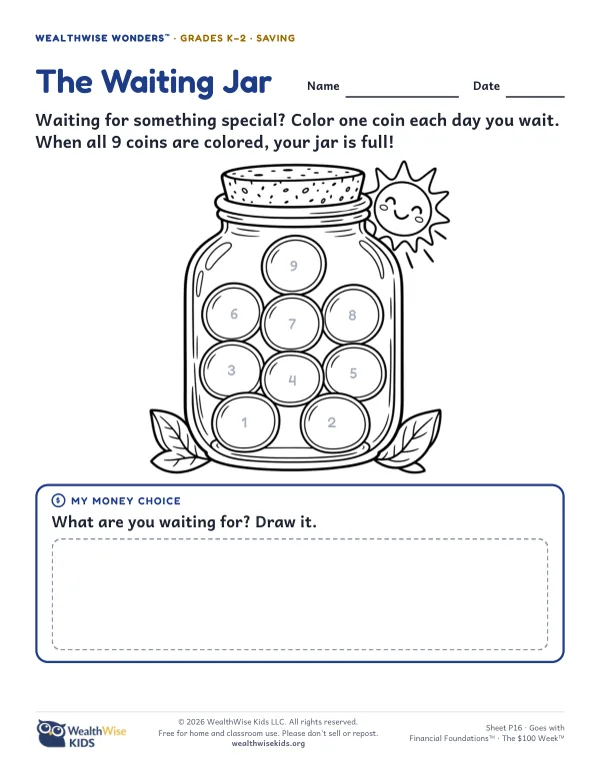
Tape the jar to the fridge. One coin a day!

Ages 5–7 · K–2

The Waiting Jar

Coloring tracker · 5 minutes, then a minute a day · Crayons

  1. Ask: “Have you ever waited for something special?”
  2. Your child draws the thing they’re saving for in the box.
  3. Each day, they color one coin in the jar until it’s full.

Ask: Was it hard to wait? Was it worth it?

Download the sheet (PDF)
Ages 8–10 · Grades 3–5

Who Saved for What?

Logic puzzle · About 10 minutes · A pencil

  1. Work out the second clue together on the grid.
  2. Your child solves the rest of the puzzle.
  3. Fill in the weeks column: the cost divided by what each friend saves a week.

Ask: Which friend has the hardest goal? How could they get there faster?

Download the sheet (PDF)
The $100 Week™: a child with $100 for the week decides whether to buy shoes for $80, wait and save, or ask a parent

Free · Five days · A few minutes a day

The $100 Week™

A short browser game. Your child gets a small budget and five days of real decisions, and Milo, our owl, asks what they’d do. No account, no login, no name asked. It works on a phone, tablet or laptop.

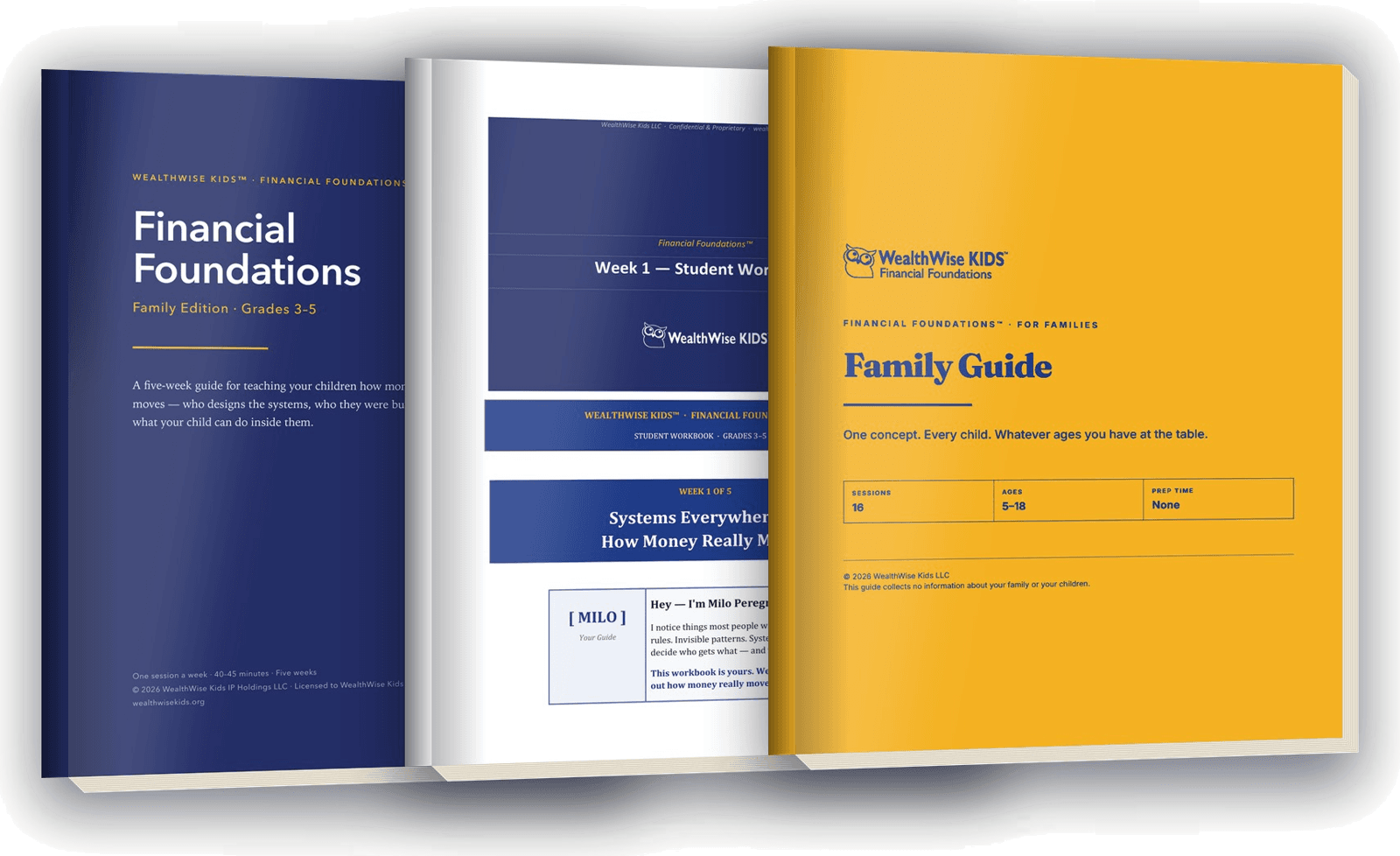
Want to keep going after the week? The Family Edition is five weekly conversations with a parent guide. See it on the Families page →

A mother and her son compare two cereal boxes in a grocery aisle

School & home

The same lesson, in class and at the store.

In class, children sort needs from wants. At the store, it’s two cereal boxes and one budget. Ask which one, and why, and you’ve just taught the lesson again, in real life.

Teachers use the same free materials. See the Teachers’ Lounge →

The newsletter

How children learn money. Once a month.

For the adults who teach it, fund it, and live with it. One email, one idea, one thing to try. Reply to unsubscribe; we do it by hand.