
Educators & facilitators
How to teach financial literacy: ready on Monday, nothing new to prepare.
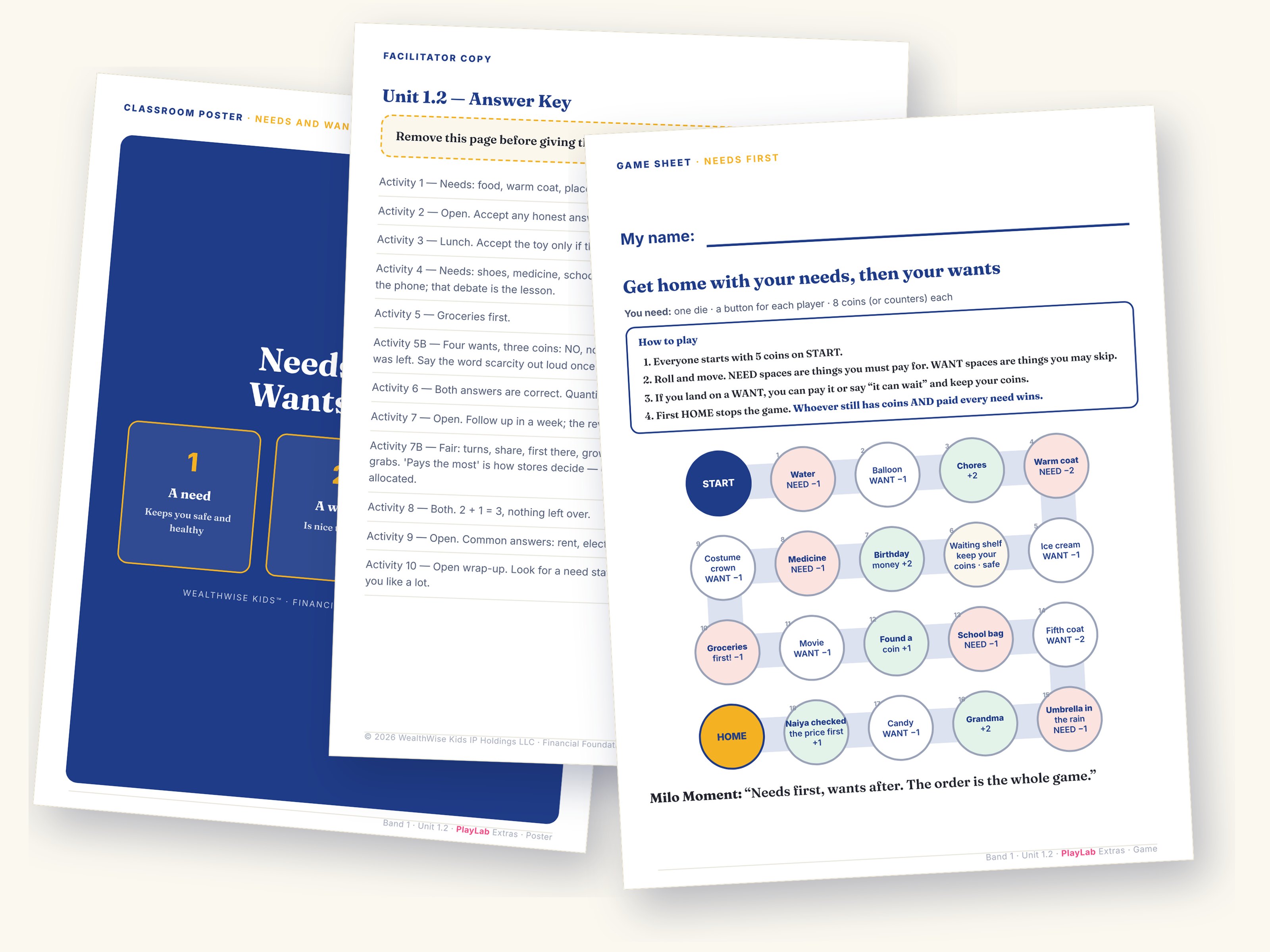
Every lesson is scripted, with the facilitator copy and the answer key behind the student pages. If you can read the lesson, you can teach it. Here is exactly what arrives, what you do, and what comes back.
No cost · No contract · No card · No finance background
Want to try one first? Free one-page worksheets for every grade band →
Grades K–12 in four bands. Mapped to the National Standards for Personal Financial Education (Jump$tart Coalition and Council for Economic Education, 2021). Available to any school, district or youth program in the United States; pricing is published.
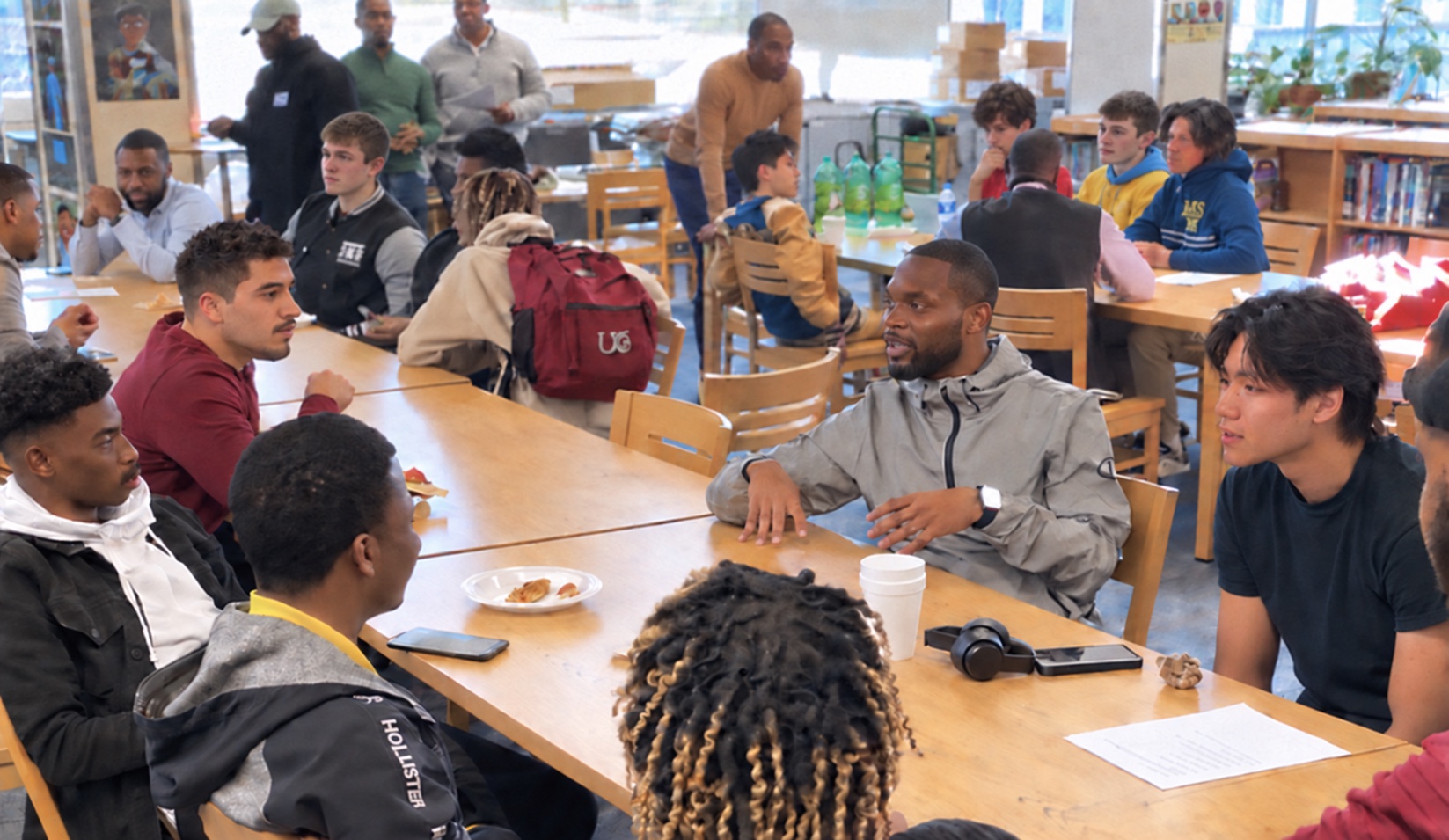
I used a portion of WealthWise Kids’ Financial Foundations curriculum with my students and also tried The $100 Week simulation. The activities gave them practical situations to discuss and helped connect financial decisions to everyday life. I appreciated having a way to guide the conversation while giving students room to think through their own choices.
What arrives
Six things, all finished before you see them.

The scripted lesson
Every activity has the facilitator copy behind it: what to say, what to ask, what a good answer sounds like, and the answer key.
The student pack
Print or on screen. Write-in space sized for the age; a child in K–2 gets a bigger line than a ninth grader.
Unit at a Glance
One page per unit: the ten activities, the concepts, the materials, the time. Read it on Sunday night and you are ready.

The family letter
One per unit, already written, goes home so the conversation continues in the car and at the store.

PlayLab Extras
A short game or hands-on activity per unit for the class that finishes early or the Friday that needs one.

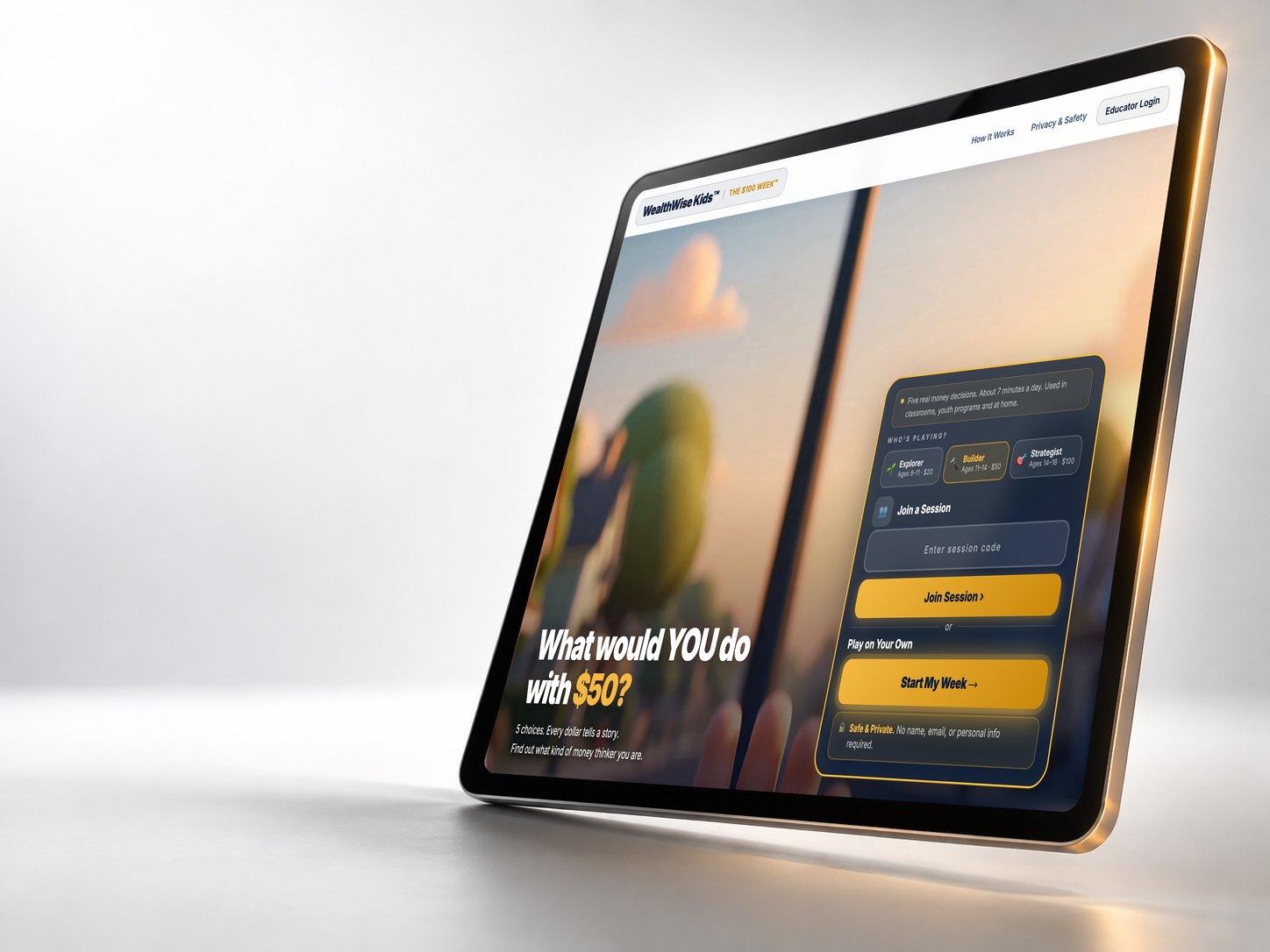
The $100 Week™
The five-day opener. Students play in a browser; no accounts, nothing to install, nothing for you to grade.
What you do
The honest time cost.
We would rather you know this now than discover it in week two.
Before
Twenty minutes, once
An onboarding call with us. Then read the Unit at a Glance for the first unit. That is the preparation.
Each session
30 to 60 minutes of class
K–2 sessions run about 30 minutes; high school up to a full period. One session a week for five weeks is the pilot.
During
Teach from the script, or from your own voice
The script is there so you never need a finance background. Lean on it as long as you like; it is written so you can put it down.
After
Nothing to grade
The FLIQ readings come from what students do inside the experiences, not from a test you mark. The report arrives to you and your leader.
What comes back
The report shows you what changed.
Two readings of the FLIQ Score™, one before and one after, taken from decisions students make inside the experiences. Nothing for you to administer.
What it shows
- Which of your students completed both readings
- The class median FLIQ Score™ and band at the first reading and the second
- Movement on the four decision traits, so you can see what changed, not only whether it did
- The moments that mattered: the decisions where the class moved most
What it never becomes
- A ranking of children, in the classroom or anywhere else
- A score shown to a student as a judgment of them
- Anything a student could be shamed with
Students see progress and their own moments. Adults see the measurement. That split is deliberate.
Traits reported
See a sample report (PDF, 3 pages) → · Read the sample research paper → · Where the evidence stands → · How the FLIQ Score™ is read →
Support that exists
One onboarding call. Email answered within one to two business days. A facilitator kit for The $100 Week™. We will not hand you a login and disappear, and we will not pretend there is a hotline.
Certification, if you want it
iMPACT Partners™ is the self-paced certification track for facilitators who deliver the programs, in a school or a community organization. Optional for a classroom pilot; expected for community delivery.
See iMPACT Partners™ →Standards alignment
Every unit is mapped to the National Standards for Personal Financial Education (Jump$tart Coalition and Council for Economic Education, 2021). The crosswalk lists what is covered and, plainly, what is not yet.
See the standards →Safe by design
What we collect, and what we never do →FERPA & COPPA
No student accounts
No bank data
No ads
No public ranking
Never sold
How children learn money. Once a month.
For the adults who teach it, fund it, and live with it. One email, one idea, one thing to try. Reply to unsubscribe; we do it by hand.
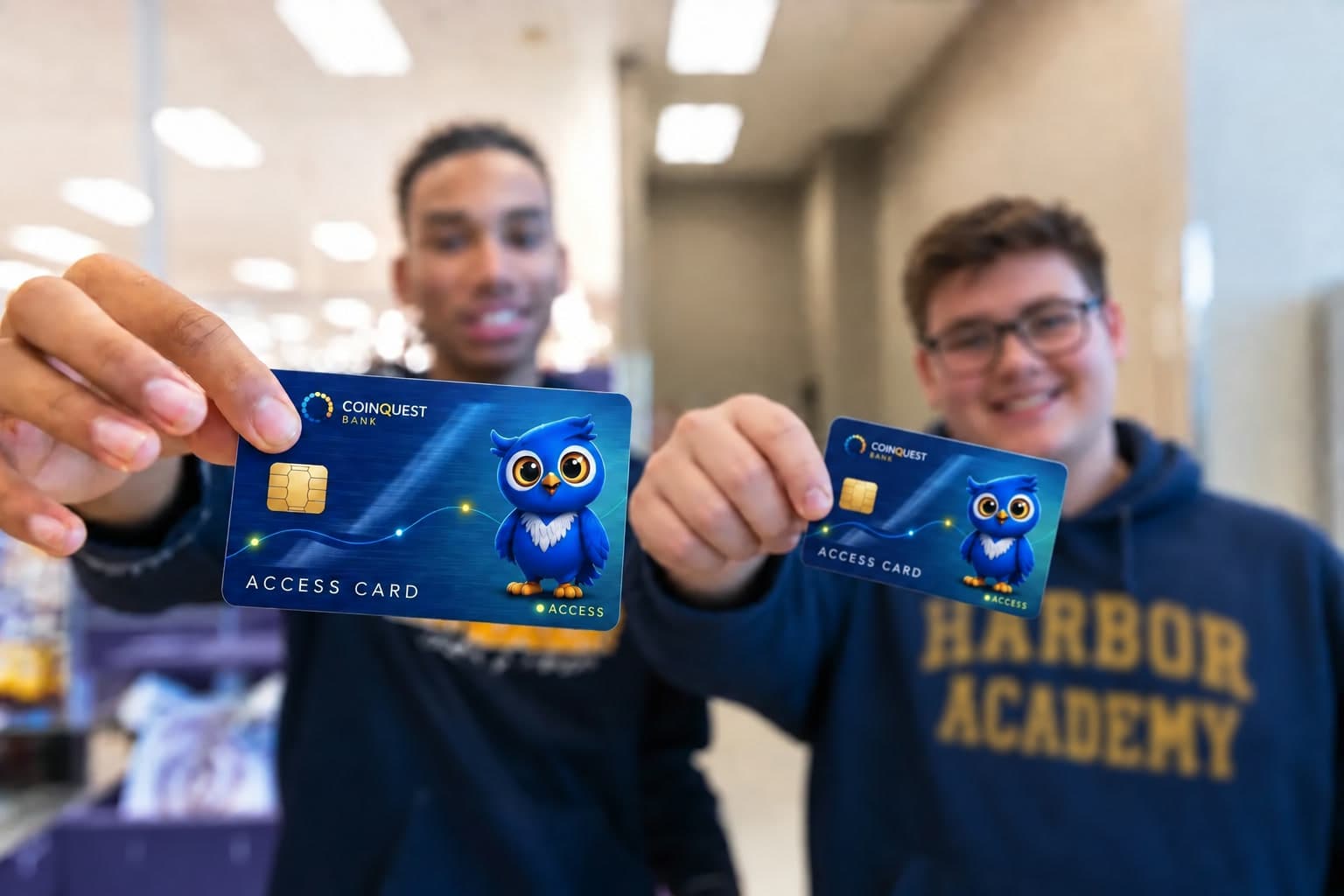
CoinQuest™Student banking simulator
Where Students Stop Learning About Money — And Start Using It.
CoinQuest™ gives every student their own simulated bank account, debit card, and spending history — so the financial decisions they practice in class feel exactly like the ones waiting for them in real life.
An account of their own, per student. Their own balance, debit card, and full transaction history.
Decisions with consequences. Spend, save, give, invest — every choice moves real (simulated) money.
Milo responds in the moment. Guidance and encouragement after every decision — never a grade.
Every choice is recorded. Each decision becomes a behavioral signal that feeds the FLIQ Score™.
Built for COPPA & FERPA · Students join with a class code from you